
VisitBest guide
Best Digital Photography Books: A Reading Path from Exposure to Visual Storytelling
An ordered reading path combining exposure and composition manuals, classic monographs, portrait and project books, and critical writing about how…
In this guide
At a glance
Editions and reprints vary, so identify books by author and title rather than ISBN alone. Book covers are copyrighted works, so this page never reproduces them; where a Commons portrait of the author could be identity-verified and freely licensed, the author is shown instead, and the five sections without a portrait say why. This is an editorial selection organised as a reading path, not a sales ranking, and it carries no affiliate links.
- Understanding Exposure — Bryan Peterson — Exposure, metering, motion, and interpreting light
- The Photographer's Eye — Michael Freeman — Composition and design for digital photographs
- Light: Science & Magic — Hunter, Biver and Fuqua — How surfaces, glass, metal, and portraits respond to light
- Read This If You Want to Take Great Photographs — Henry Carroll — Short, visual explanations of enduring principles
Shortlist and comparison
| Topic | Best for | What to verify |
|---|---|---|
| Understanding Exposure — Bryan Peterson | Exposure, metering, motion, and interpreting light | Beginners who understand camera basics but guess settings |
| The Photographer's Eye — Michael Freeman | Composition and design for digital photographs | Photographers choosing images deliberately |
| Light: Science & Magic — Hunter, Biver and Fuqua | How surfaces, glass, metal, and portraits respond to light | Studio and product-photography learners |
| Read This If You Want to Take Great Photographs — Henry Carroll | Short, visual explanations of enduring principles | Beginners put off by technical manuals |
| The Negative — Ansel Adams | The Zone System, film exposure and development | Film photographers and darkroom printers |
| The Decisive Moment — Henri Cartier-Bresson | 126 photographs and the essay that named a way of seeing | Street photographers and photojournalism readers |
| The Americans — Robert Frank | 83 photographs from a Guggenheim-funded road trip | Readers of documentary photography and sequencing |
| Steve McCurry: The Iconic Photographs — Steve McCurry | Three decades of colour photojournalism in one volume | Travel and documentary photographers |
| Annie Leibovitz at Work — Annie Leibovitz | How famous portraits were lit, posed and made | Portrait photographers at any level |
| Humans of New York — Brandon Stanton | Street portraits paired with short interviews | Readers building a portrait project of their own |
| Magnum Contact Sheets | Frames around famous photographs and editing decisions | Intermediate photographers learning selection |
| On Photography — Susan Sontag | Critical essays on what photographs do | Readers, writers, and image makers |
| Ways of Seeing — John Berger | How context and ideology shape images | Visual-culture and media literacy |
The brands in detail
1. Understanding Exposure — Bryan Peterson
Bryan Peterson's Understanding Exposure, published by Amphoto Books, has been the standard first exposure manual since its first edition in 1990. It teaches the exposure triangle — aperture, shutter speed and ISO — as a set of creative choices rather than a single correct answer: the same scene can be exposed for frozen motion or blur, for depth of field or isolation, and the book shows what each choice does to the picture. Peterson's plain-language approach uses his own photographs throughout, with metering explained for the tricky situations where cameras guess wrong, such as bright beaches and backlit subjects.
The fourth edition, published on 15 March 2016, replaced all of the photographs, brought the coverage up to date for current cameras, and added expanded material on using flash and on photographing subjects such as star trails. Read it first on this list: it turns the camera from an auto-mode box into an instrument you set deliberately. This section carries no photograph — no identity-verified, freely licensed portrait of Bryan Peterson exists on Wikimedia Commons.
2. The Photographer's Eye — Michael Freeman
Michael Freeman's The Photographer's Eye, published by Ilex in 2007 (and by Focal Press in the United States), carries the subtitle Composition and Design for Better Digital Photos, and it remains the most systematic composition book written for digital photographers. Freeman — the author of more than forty books on photography — breaks picture-making down into the frame itself, the placement of subjects, balance, lines, and the relationships between colours, and shows how classic design ideas translate to a medium where the image can be reviewed, cropped and edited after the fact.
The book runs to 192 pages and is built around diagrams and Freeman's own assignment photographs rather than rules of thumb: where a beginner's book says 'use the rule of thirds', Freeman shows what a picture gains or loses as elements move. Read it once you can expose a frame reliably; it is the point where this list stops being about operating a camera and starts being about deciding what a photograph should contain. This section carries no photograph — no identity-verified, freely licensed portrait of the author exists on Wikimedia Commons.
3. Light: Science & Magic — Hunter, Biver and Fuqua
Light: Science & Magic, by Fil Hunter, Steven Biver and Paul Fuqua and published by Focal Press, is subtitled An Introduction to Photographic Lighting, and it is the physics book of this list — the one that explains why light behaves as it does before telling you where to put a lamp. Its core tools are the types of reflection and the 'family of angles' for a subject: understand those, and you can predict how any surface will photograph.
Later chapters apply the theory to the classic hard subjects — lighting metal without burning it out, making glass visible against light and dark backgrounds, portrait lighting, and the extremes of black-on-black and white-on-white. The fifth edition (2015) runs to 382 pages and adds a chapter on setting up a first studio. It is slower going than Peterson or Carroll, and deliberately so: this is the reference you keep beside the studio desk for years. This section carries no photograph — no single portrait represents its three authors, and none of them has an identity-verified, freely licensed Commons portrait.
4. Read This If You Want to Take Great Photographs — Henry Carroll
Henry Carroll's Read This If You Want to Take Great Photographs, published by Laurence King in March 2014, is the friendly outlier of the technique section: 128 pages, five short sections — composition, exposure, light, lenses and seeing — and a deliberate absence of jargon, diagrams and camera menus. Instead of teaching from his own pictures, Carroll teaches through fifty iconic published photographs — by names such as Henri Cartier-Bresson, Sebastião Salgado and Martin Parr — explaining in plain language what each image does and how a beginner can borrow the idea.
Carroll studied photography at the Royal College of Art and founded the photography-experience company Frui; the book grew out of teaching people who owned good cameras and were not making pictures that pleased them. It is the book to give a beginner who finds manuals intimidating, and a useful palate cleanser between heavier volumes. This section carries no photograph — no identity-verified, freely licensed portrait of Henry Carroll exists on Wikimedia Commons.
5. The Negative — Ansel Adams
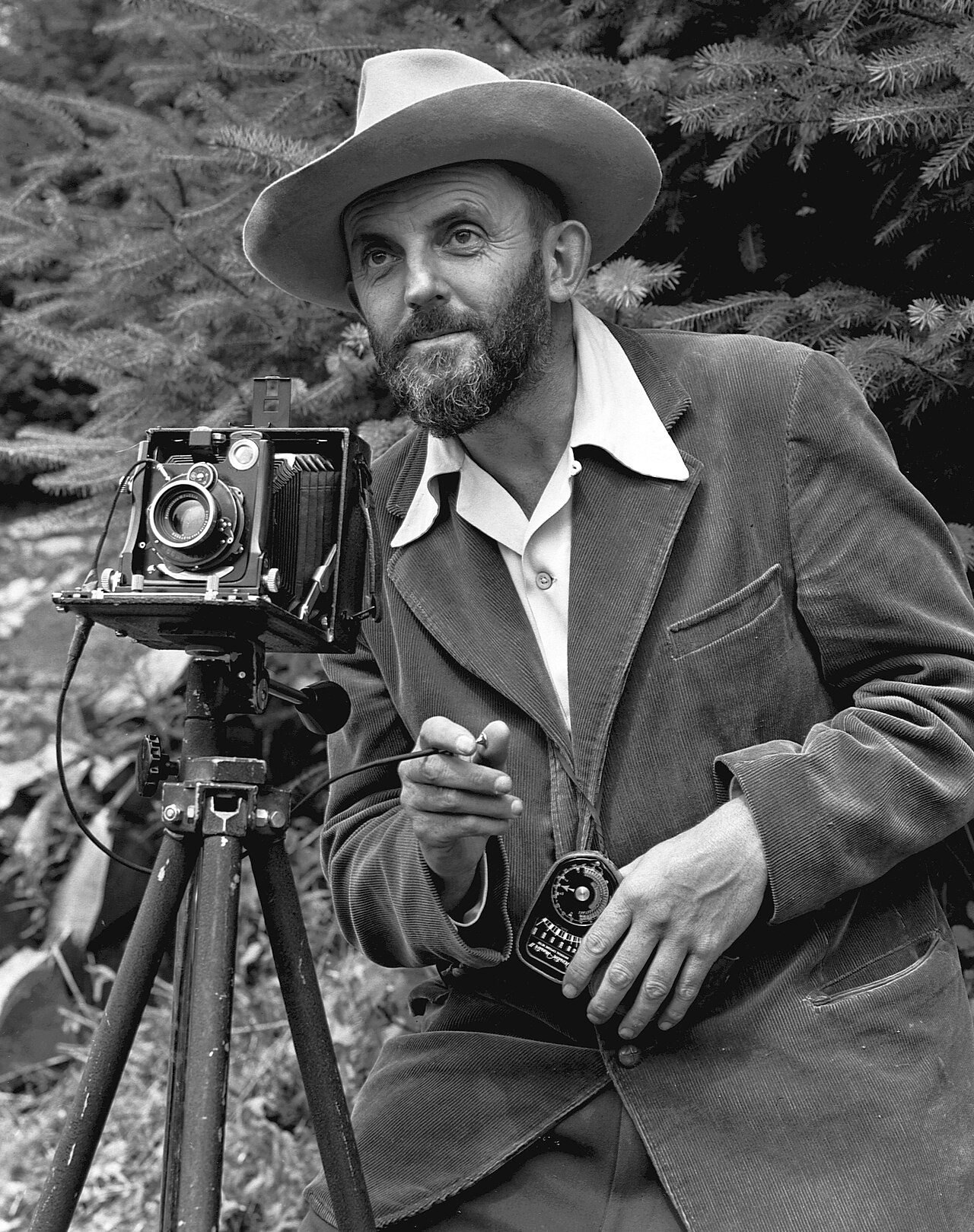
The Negative, published in 1981 by the New York Graphic Society, is the middle volume of Ansel Adams's New Ansel Adams Photography Series — The Camera (1980) and The Print (1983) complete the set — and a thorough revision of the Basic Photo series he had published from the 1940s. Written with Robert Baker, it sets out the Zone System Adams developed with Fred Archer: a method of visualising a scene's tones before exposure and then exposing and developing film to place those tones exactly where the photographer wants them.
For film photographers it is still the definitive text on exposure and development, and its discipline — decide the final image first, then work backwards to the settings — survives translation into digital practice, where it underlies modern exposure-to-the-right and tonal-planning habits. Adams, co-founder of Group f/64 and the best-known landscape photographer of the twentieth century, appears in the photograph here beside the large-format camera his system was built around. Read it when the technique books have made you curious about how much control over tone is really possible.
6. The Decisive Moment — Henri Cartier-Bresson
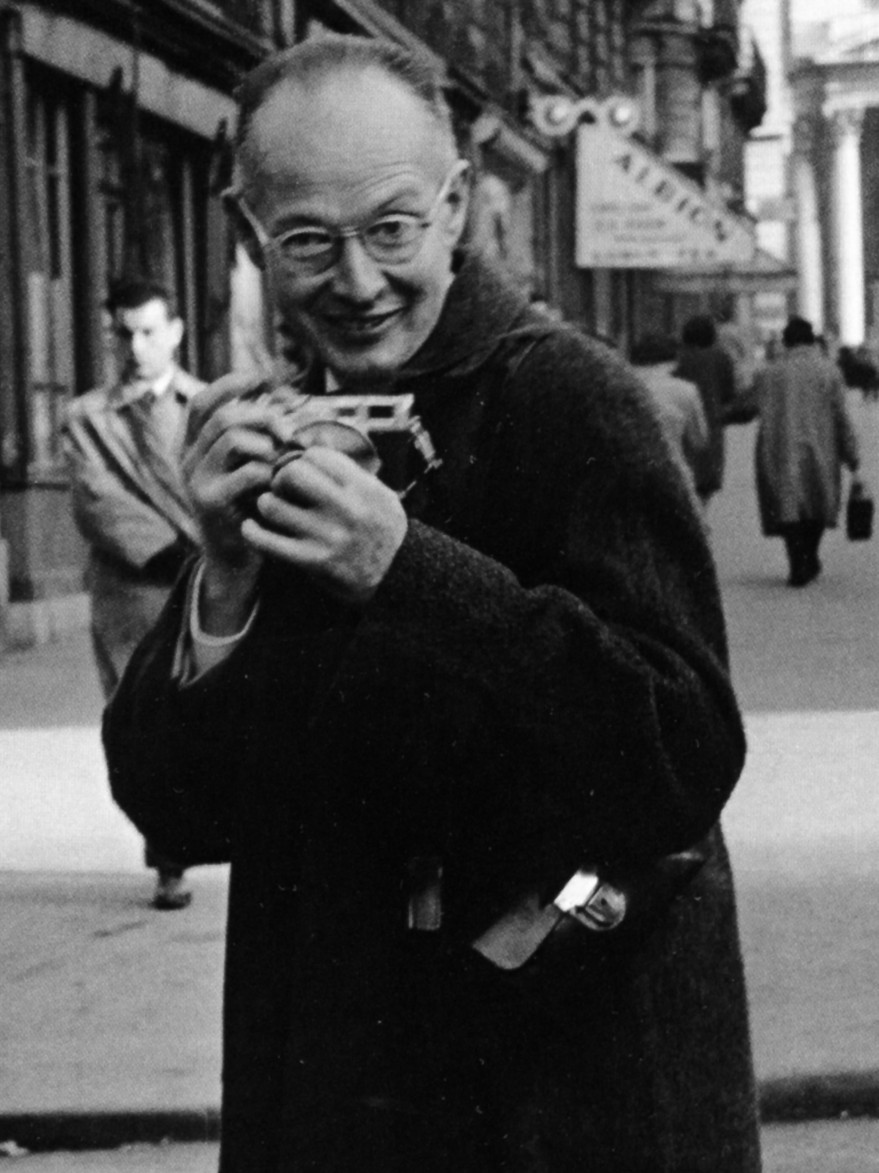
Published in 1952 — as Images à la sauvette by Éditions Verve in Paris and as The Decisive Moment by Simon & Schuster in New York — Henri Cartier-Bresson's first great book gathered 126 of his photographs in photogravure, under a cover collage by Henri Matisse, with a long introductory essay in which he described his approach to reportage. Its English title gave photography its most famous phrase: the decisive moment, the instant when form and meaning align and the photographer must recognise and seize both at once.
Cartier-Bresson, who had co-founded the Magnum Photos agency in 1947, worked with a quiet Leica, available light and no cropping, and the book became the template for the twentieth-century photo essay; his fellow Magnum founder Robert Capa called it 'a Bible for photographers'. Long out of print as an affordable object, it was reissued in a facsimile edition by Steidl in 2014. The portrait here, by the Japanese photographer Ihei Kimura, shows Cartier-Bresson with his Leica in Paris in 1954.
7. The Americans — Robert Frank
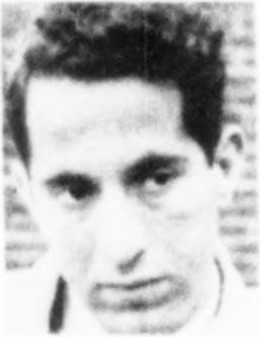
With a Guggenheim Fellowship awarded in 1955 — an application supported by Walker Evans — the Swiss-born Robert Frank drove across the United States between April 1955 and June 1956, exposing some 767 rolls of film and roughly 27,000 frames. From that mass he edited just 83 photographs. Published first in Paris by Robert Delpire in 1958 and in the United States by Grove Press in 1959, with an introduction by Jack Kerouac, The Americans presented a sceptical, melancholy country of diners, jukeboxes, funerals, flags and lonely highways — a deliberate rebuke to the cheerful magazine photography of its era, and initially attacked for it.
It is now routinely described as the most influential photography book of the twentieth century, and it is on this list as much for its editing as for its pictures: the leap from 27,000 frames to 83 sequenced images remains the supreme lesson in how a body of work is made in the edit. The portrait here shows Frank in 1953, shortly before the journey; it survives only at small size and is published here at its natural dimensions.
8. Steve McCurry: The Iconic Photographs — Steve McCurry
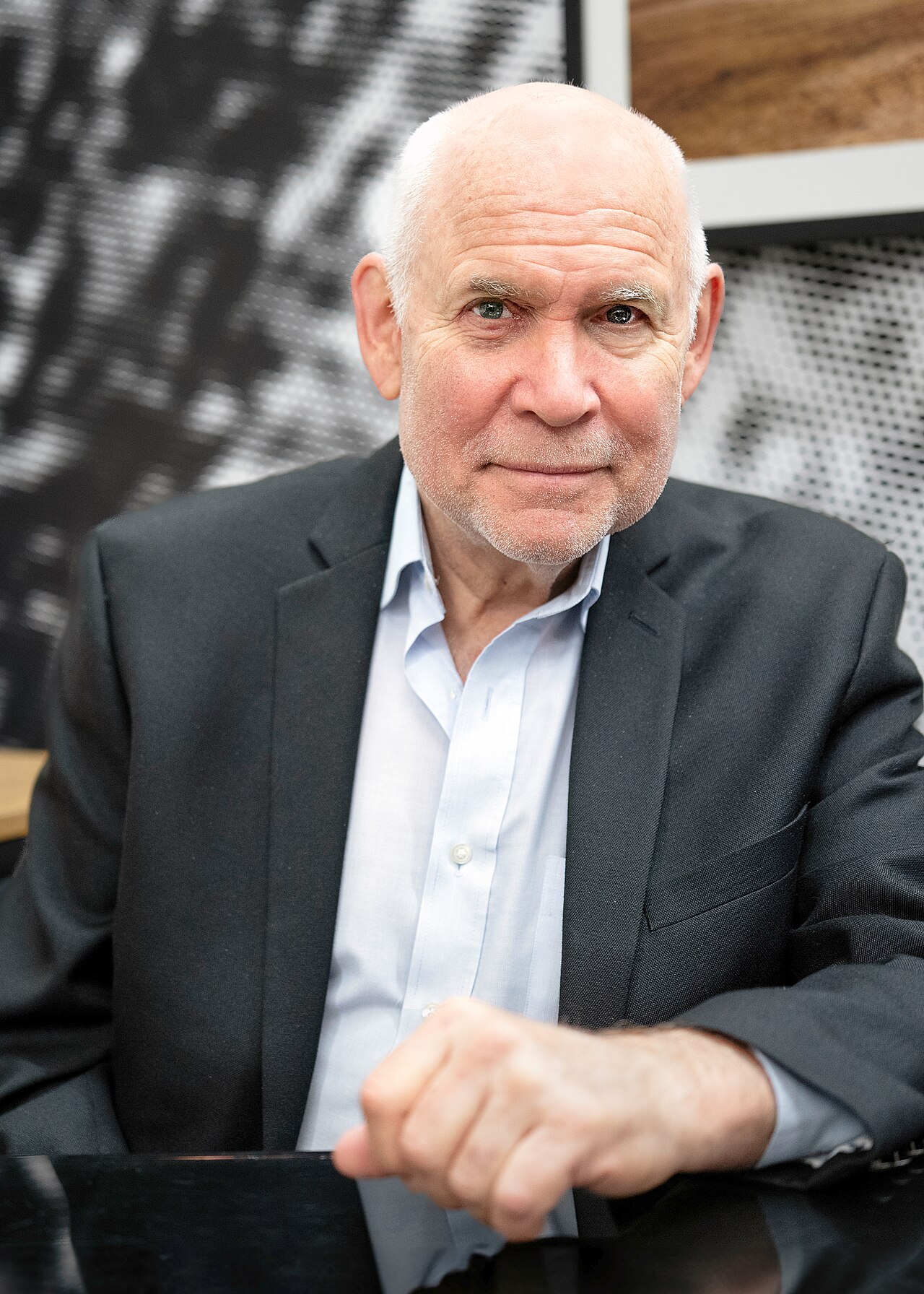
Steve McCurry: The Iconic Photographs, published by Phaidon in October 2012, is a 272-page large-format survey of around thirty years of the American photographer's work, produced with William Kerry Purcell and with a foreword by Anthony Bannon. McCurry, a Magnum Photos member since 1986, made his name covering Afghanistan and South and Southeast Asia, and the book gathers the images that built that reputation — above all Afghan Girl, his 1984 portrait of a young refugee whose green eyes became one of the most recognised magazine covers ever published — alongside street scenes in India, monks at Angkor and portraits from Tibet.
Where the technique books on this list teach method, this one teaches ambition for colour: McCurry's saturated, patiently waited-for frames show what decades of returning to the same regions can build. It is also a useful study in sequencing a career into a single volume. The photograph here shows McCurry in 2024, forty years after Afghan Girl was taken.
9. Annie Leibovitz at Work — Annie Leibovitz
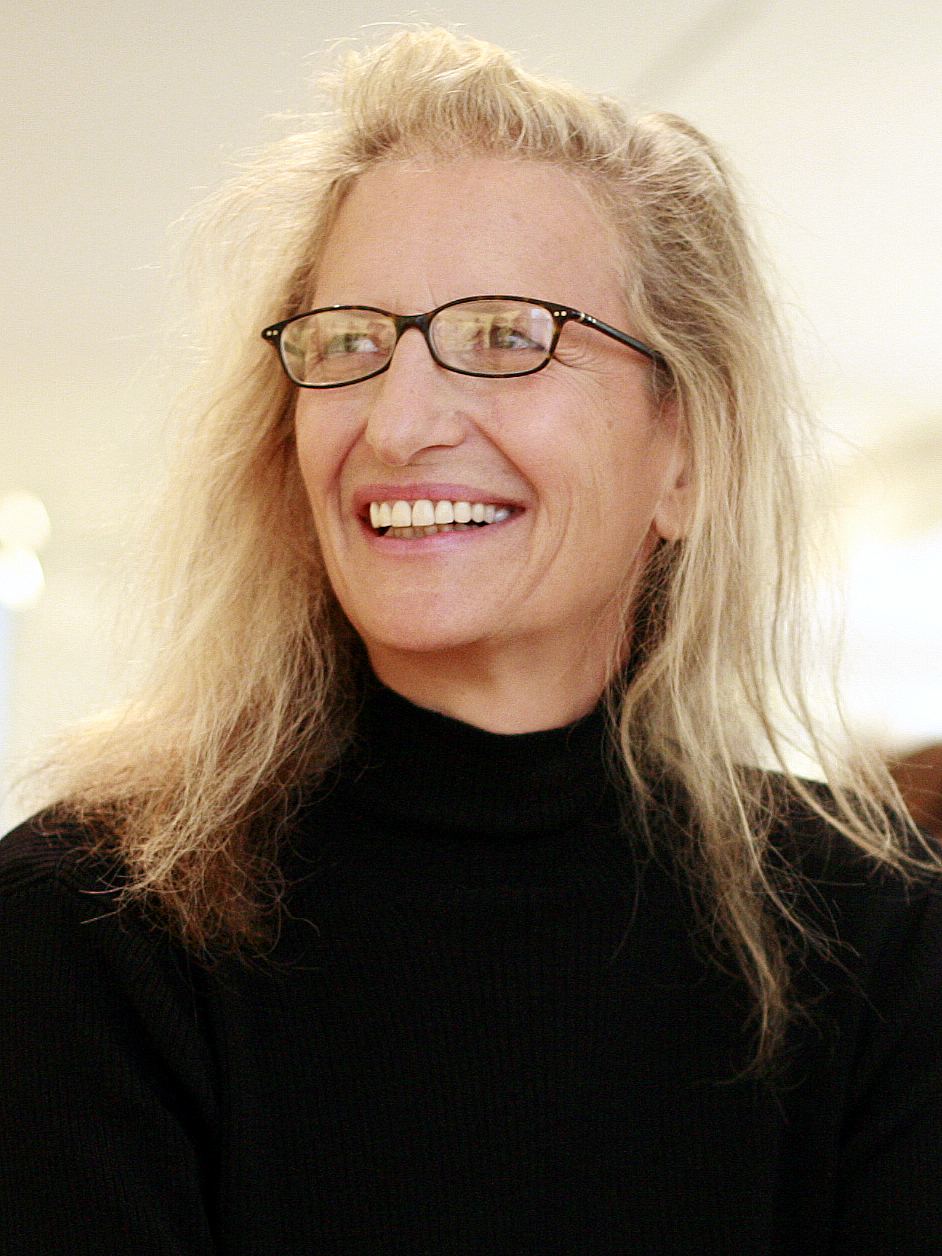
Annie Leibovitz at Work, published by Random House on 18 November 2008, is the most practical celebrity-portrait book ever written, because Leibovitz — the defining portraitist of Rolling Stone and Vanity Fair — explains her own pictures rather than theorising about other people's. Across some ninety photographs she describes how each shoot was conceived, lit and directed, with the technical detail working photographers actually want: camera systems, lighting set-ups and settings.
The range runs from her early reportage — she photographed Richard Nixon's resignation and toured with the Rolling Stones in 1975, and took the Polaroid of John Lennon and Yoko Ono hours before Lennon's murder — to the elaborately produced celebrity portraits of her later career and the official-style access of the Obama campaign. The text grew out of conversations with her editor Sharon Delano. Read it as a bridge between the technique section of this list and its essay section: craft, discussed by a master, without mystique. It remains the first recommendation for anyone asked how a famous portrait was actually made.
10. Humans of New York — Brandon Stanton
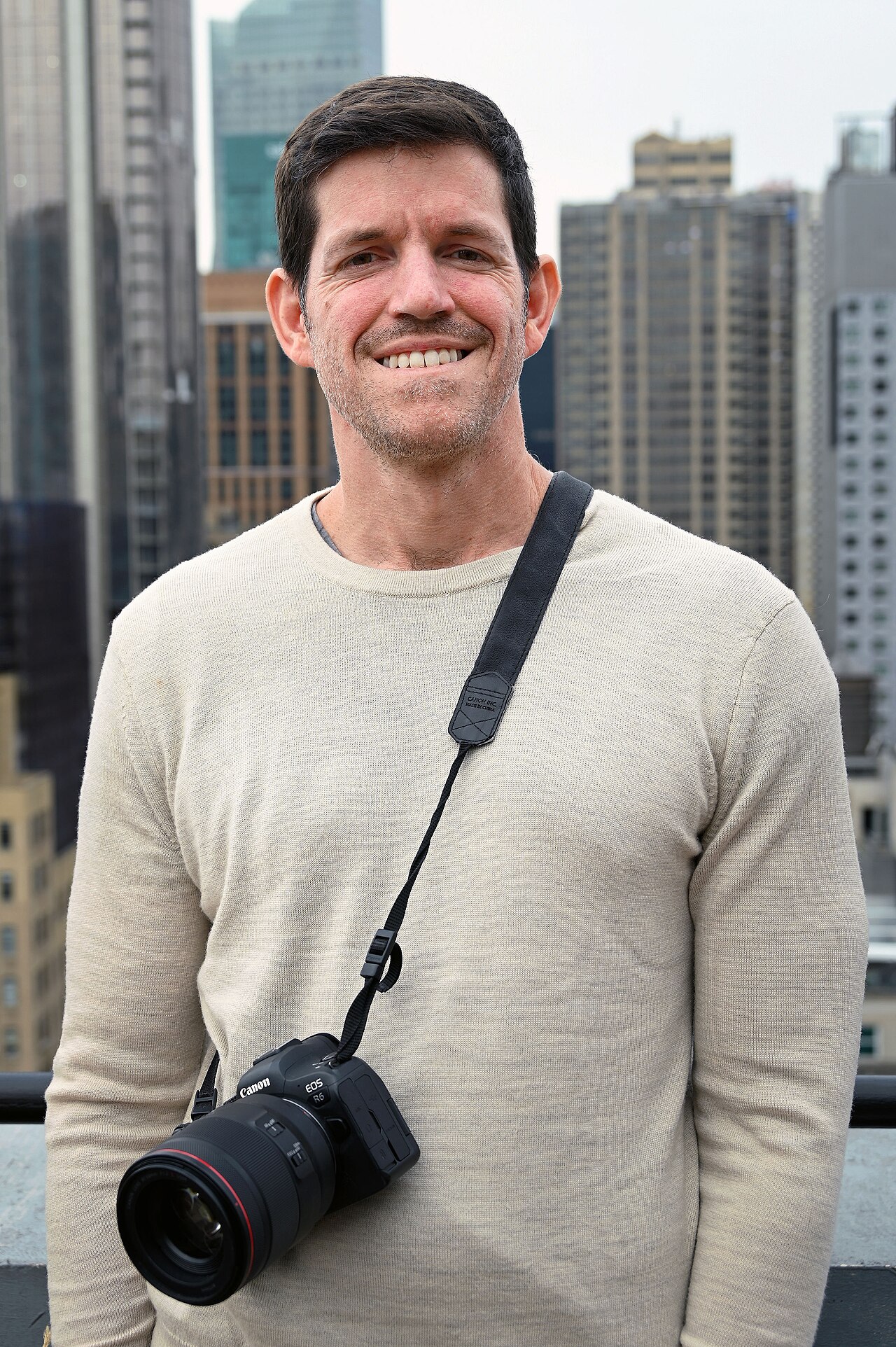
Brandon Stanton began Humans of New York in November 2010 with a simple protocol: walk the city, ask a stranger for a portrait, and — the innovation — interview them and publish the portrait beside a fragment of their own words. The project moved from a blog to a photographer with tens of millions of followers across social platforms, inspired 'Humans of' projects in cities around the world, and brought Stanton invitations unusual for a street photographer, including interviewing President Barack Obama in the Oval Office in 2015. The first book, published in 2013, collects the portraits and captions in print form.
For readers of this list, its lesson is not technical: it demonstrates that a portrait project is built from approach, consent and listening, repeated thousands of times, and that a consistent format honestly maintained can become a life's work. The photograph here shows Stanton with the camera he carries on those walks.
11. Magnum Contact Sheets
Magnum Contact Sheets, edited by the International Center of Photography curator Kristen Lubben and published by Thames & Hudson in 2011, is the editing masterclass of this list. A contact sheet holds every frame from a roll of film, in order — including the failures, the near-misses and the warm-ups — and this 508-page volume reproduces some 139 contact sheets by 69 photographers of the Magnum agency, each shown beside the single famous frame that was chosen from it.
Seeing the frames around an iconic image changes how you judge your own work: masterpieces emerge from sequences of ordinary attempts, and the difference between photographers is often the difference in what they select. The sheets span the agency's history from its founding generation onwards and come with the photographers' own accounts of the shoots. No photograph accompanies this section: the book is a collective work by dozens of photographers, its editor has no identity-verified, freely licensed Commons portrait, and no single face could honestly represent it — the description-only treatment is the accurate one.
12. On Photography — Susan Sontag
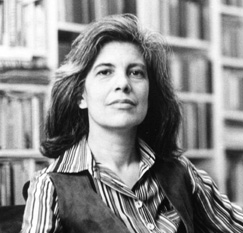
Susan Sontag's On Photography, published in 1977, collects the essays she published in The New York Review of Books between 1973 and 1977, and it remains the most argued-with book ever written about the medium. Sontag argues that photographing is a form of appropriation; that cameras turn their users into voyeurs and tourists of reality; that images of suffering can numb as easily as they arouse; and that the flood of photographs changes what events themselves mean. A central contrast in the book sets the sponsored documentary photography of the Depression era against Diane Arbus, whose subjects she reads as a very different kind of transaction between photographer and sitter.
You do not have to agree with Sontag — photographers have been answering her for nearly fifty years — but you will photograph more consciously for having read her. The portrait here is Lynn Gilbert's 1979 headshot of Sontag; it survives only at small size and is published at its natural dimensions, never enlarged.
13. Ways of Seeing — John Berger
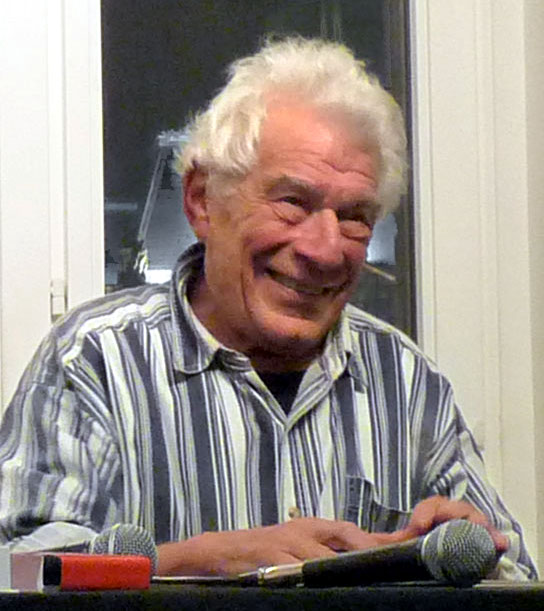
Ways of Seeing began as a four-part BBC Two television series broadcast in January 1972, created by John Berger with director Mike Dibb as a deliberate reply to Kenneth Clark's Civilisation: where Clark celebrated the Western art tradition, Berger asked who images serve and how they persuade. The book of the same year turns the series into seven essays — several of them composed largely of images without text — covering the oil-painting tradition, the portrayal of women, the language of possessions and the dream-world of publicity advertising.
Its most quoted argument is that a reproduction changes a painting's meaning by changing its context, an idea that has only sharpened in the age of the phone screen. For photographers, Berger is the necessary companion to Sontag: both insist that seeing is never innocent. Read Ways of Seeing last on this list, then go back to the technique books — you will use them differently. The photograph here shows Berger in 2009, still writing and arguing in his tenth decade.
How to choose
Start with the real decision: who will use this, where, how often, and what would make the choice unsafe or disappointing? The following checks keep the shortlist practical.
- Current skill gap
- Balance of technique and visual thinking
- Exercises you will actually complete
- Edition and image reproduction quality
What to verify before you commit
Confirm the current specification, price or availability, terms, and seller or provider identity. For companies and services, request a written scope, named contact, references, and cancellation or warranty terms. For products, compare the unit price, compatibility, return window, and genuine support.
Editorial update
Editions and reprints vary, so identify books by author and title rather than ISBN alone. Book covers are copyrighted works, so this page never reproduces them; where a Commons portrait of the author could be identity-verified and freely licensed, the author is shown instead, and the five sections without a portrait say why. This is an editorial selection organised as a reading path, not a sales ranking, and it carries no affiliate links.
Frequently asked questions
How should I use this guide?
Use the shortlist to define what matters to you, then verify current price, availability, rules, credentials, or catalogue details at the source before you decide.
Is this a fixed ranking?
No. The refreshed page is an editorial starting point organised by fit and evidence. The right choice depends on your use case, location, budget, and timing.
When will this page be updated?
VisitBest reviews time-sensitive details when reliable public information changes. Send corrections or newer source links to visitbest10@gmail.com.
Keep exploring
Punjabi Motivational Shayari on Life: Original Lines with Meaning
Original Punjabi motivational couplets in Gurmukhi with simple English meanings for captions, reflection, and encouragement.

Punjabi Sad Shayari: Original Reflective Lines with Meaning
Original Punjabi lines about distance, memory, and healing, presented in Gurmukhi with simple English meanings.

Top 6 Yoga Mats: Choose the Right Grip, Cushion and Material
Compare yoga mats by practice style, grip when dry or sweaty, thickness, density, size, material, odour, cleaning, and carrying weight.