
VisitBest guide
Fun Facts About Chocolate: Cacao, History and How It Is Made
A fact-checked introduction to cacao fruit, fermentation, roasting, cocoa butter, chocolate styles, tempering, and cultural history, with the popular myths…
In this guide
At a glance
Chocolate facts are often repeated without context. This page distinguishes the cacao plant, cocoa ingredients, finished chocolate, and modern confectionery. Where a widely repeated claim could not be traced to a reliable source it was left out, and where a figure is an industry estimate rather than a measurement, the text says so.
- Chocolate begins as fruit — Cacao beans are the seeds of a fruit that grows straight from the trunk
- Cacao only grows in the tropics — The tree needs heat, rain and shade, within about 20 degrees of the equator
- Fermentation builds the flavour — Fresh beans are heaped or boxed for days so microbes can transform them
- The beans are dried in the sun — Fermented beans must dry to about 7 per cent moisture before they can travel
Shortlist and comparison
| Topic | Best for | What to verify |
|---|---|---|
| Chocolate begins as fruit | Cacao beans are the seeds of a fruit that grows straight from the trunk | Botany |
| Cacao only grows in the tropics | The tree needs heat, rain and shade, within about 20 degrees of the equator | Botany |
| Fermentation builds the flavour | Fresh beans are heaped or boxed for days so microbes can transform them | Processing |
| The beans are dried in the sun | Fermented beans must dry to about 7 per cent moisture before they can travel | Processing |
| Roasting is only one stage | Heat, cracking and winnowing turn dried beans into nibs ready for grinding | Manufacture |
| A Dutch press changed everything in 1828 | Van Houten's press split cocoa butter from powder and made modern cocoa possible | History |
| Conching gave chocolate its silkiness | Rodolphe Lindt's 1879 machine refined chocolate for hours until it turned smooth | History |
| Tempering is crystal management | Cocoa butter sets in six crystal forms, and only one gives gloss and snap | Food science |
| White chocolate is real chocolate, with an asterisk | It contains cocoa butter but no cocoa solids, and food law sets a minimum butter content | Chocolate styles |
| Ruby chocolate arrived in 2017 | A naturally pink chocolate, launched after more than a decade of development | Chocolate styles |
| The first solid bar was made in Bristol in 1847 | Fry's mixed cocoa butter back into powder and sugar to make chocolate you could eat | History |
| Milk chocolate took years to crack | Daniel Peter succeeded in 1875 by using his neighbour Nestlé's condensed milk | History |
| Chocolate was a drink for most of its history | Mesoamerican peoples drank cacao frothy and spiced, and used the beans as money | History |
| The percentage is not a quality score | A 70 per cent bar tells you the cocoa content, not how good it is | Buying |
| Storage quietly changes flavour | Heat, moisture and smells cause bloom and staleness long before chocolate is unsafe | Care |
| Switzerland eats the most chocolate | The country that grows no cacao regularly tops the per-capita consumption tables | Culture |
The brands in detail
Chocolate begins as fruit
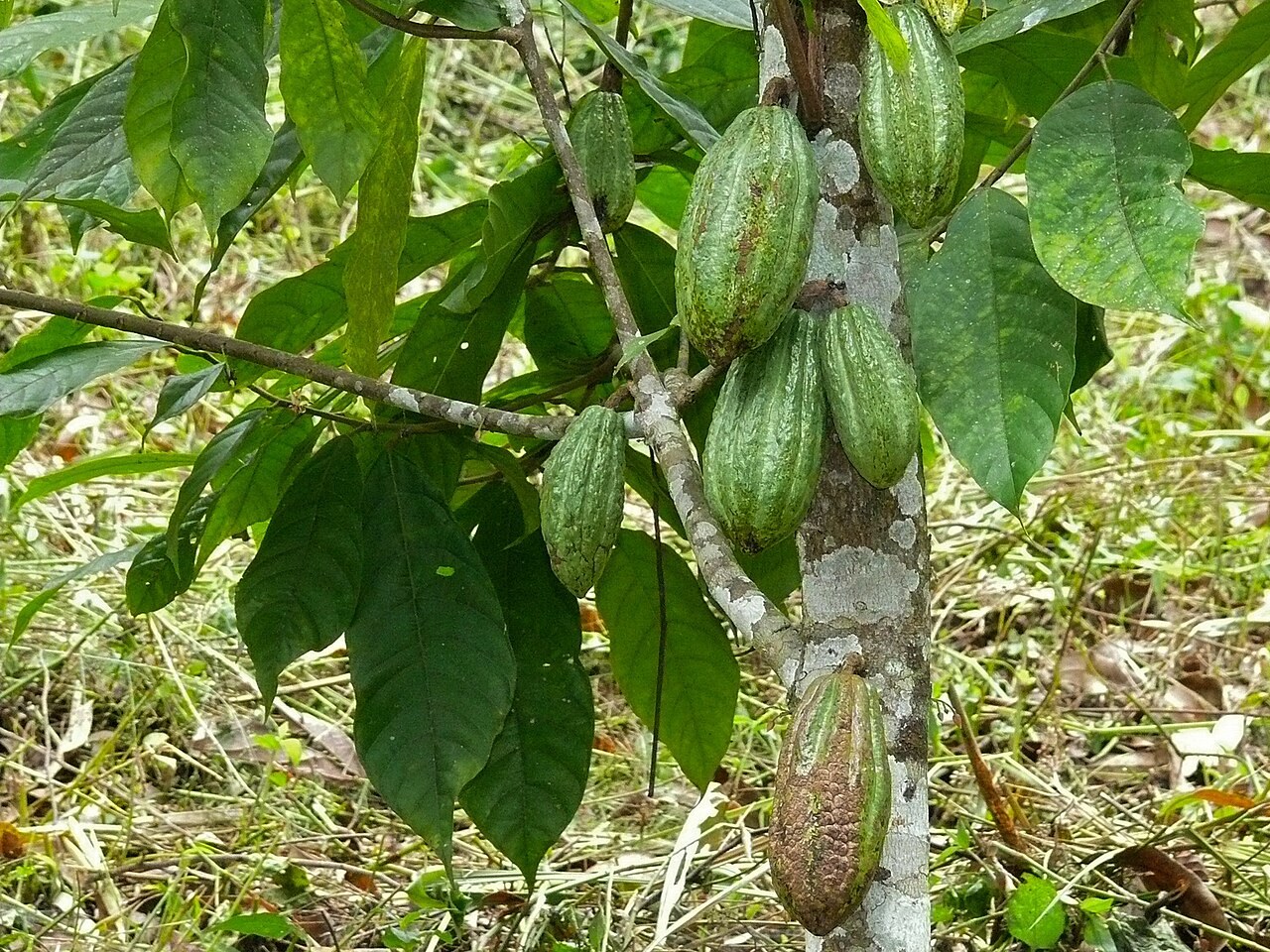
Every bar starts as a fruit. The cacao tree, Theobroma cacao, bears large oval pods that sprout directly from the trunk and main branches, a habit botanists call cauliflory. Inside each pod, a few dozen seeds, the cacao beans, sit in a sweet, white, fruity pulp. The tree's scientific name is its own fact: Theobroma is Greek for "food of the gods", a judgement Linnaeus made when he classified it in the eighteenth century. Fresh beans taste nothing like chocolate; straight from the pod they are bitter and astringent, and the pulp around them tastes closer to lychee or mango.
Everything that makes chocolate taste like chocolate happens later, through fermenting, drying, roasting and grinding, which is why those stages get their own facts in this list.
Cacao only grows in the tropics
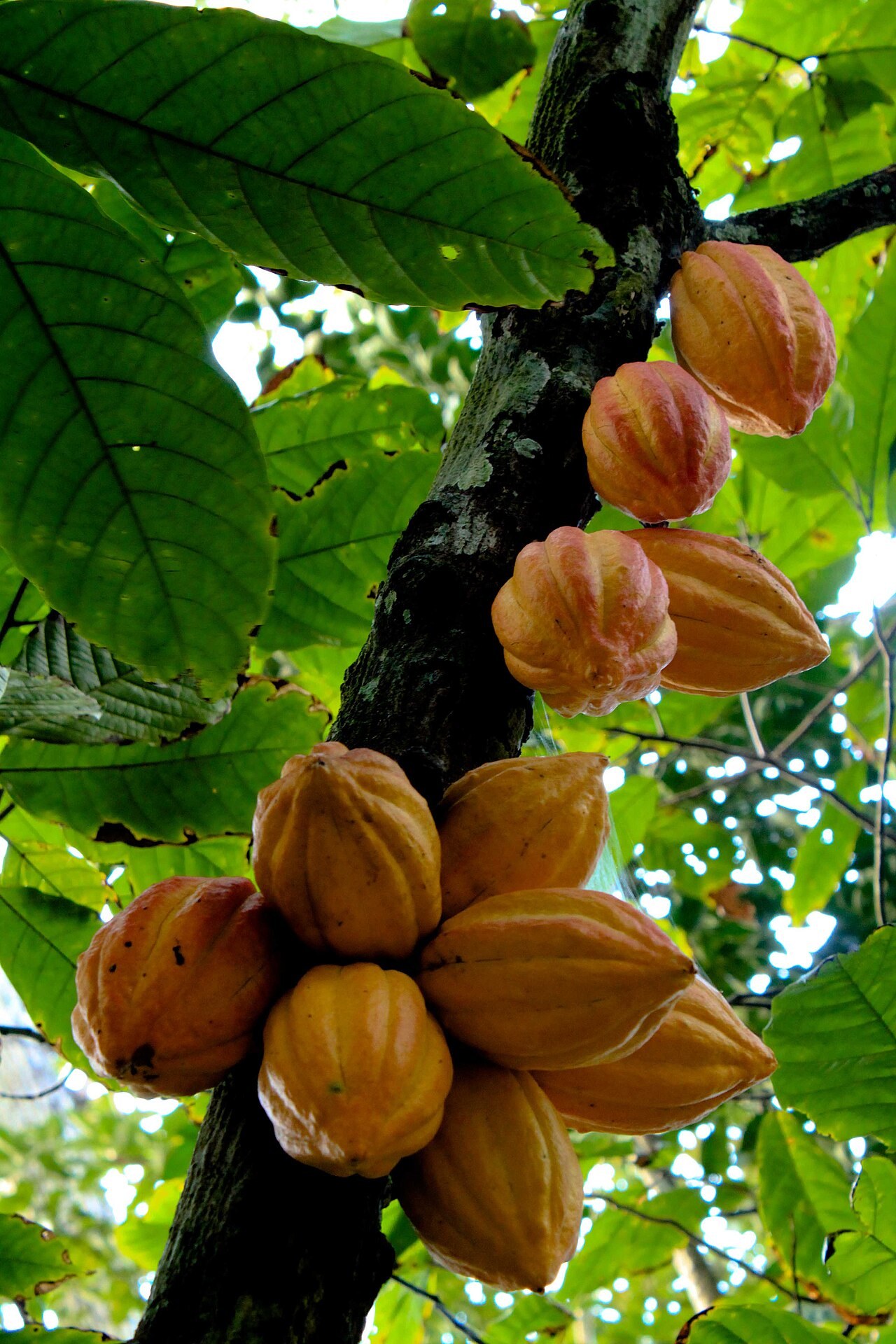
Cacao is a fussy tree. It grows only in a narrow belt roughly 20 degrees north and south of the equator, where temperatures stay warm all year, rain is plentiful and the air is humid. In the wild it evolved as an understorey tree in Amazonian rainforest, so young trees still need shade, traditionally provided by banana plants or taller timber trees in agroforestry systems. Three variety groups are usually recognised: Criollo, the rare, mild cacao of Central America; Forastero, the hardy group that supplies most of the world's bulk cacao from West Africa and Brazil; and Trinitario, a hybrid of the two that emerged in Trinidad.
That geography is why the world's chocolate is made in temperate countries but its raw material almost never is, and why climate pressure on West Africa matters so much to prices.
Fermentation builds the flavour
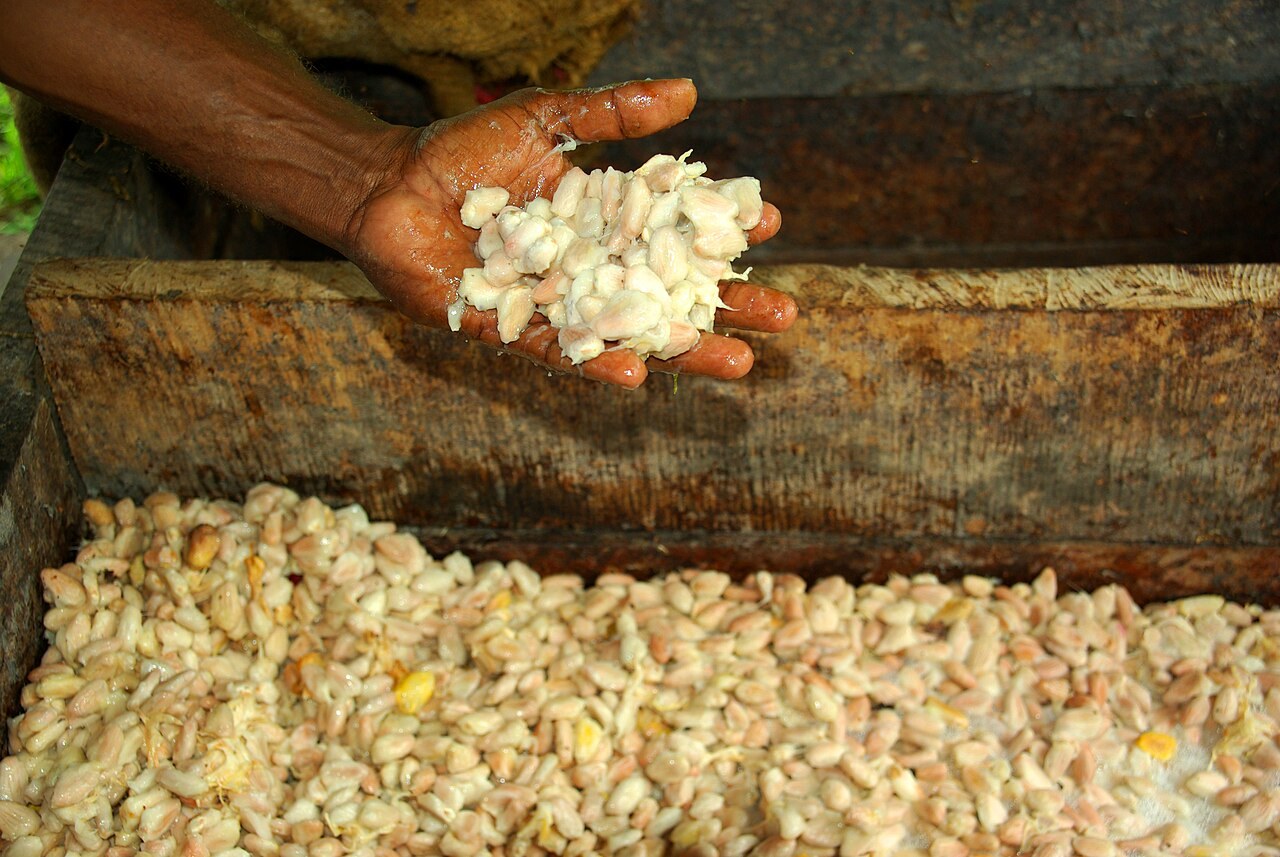
Chocolate flavour is largely created by microbes. After harvest, beans and their sugary pulp are heaped under banana leaves or layered in wooden boxes for roughly two to seven days. Wild yeasts first turn the pulp's sugars into alcohol; bacteria then convert that to acetic acid, and the temperature inside the heap climbs. The heat and acid kill the seed's germ and trigger chemical changes inside the bean, building the flavour precursors that roasting will later turn into recognisably chocolatey aromas. Farmers turn the mass regularly so it ferments evenly.
Skip or shorten this stage and the beans stay bitter, astringent and flat, no matter how good the later processing is. Fermentation is the single biggest reason well-handled smallholder cacao and rushed bulk cacao taste different in the finished bar.
The beans are dried in the sun
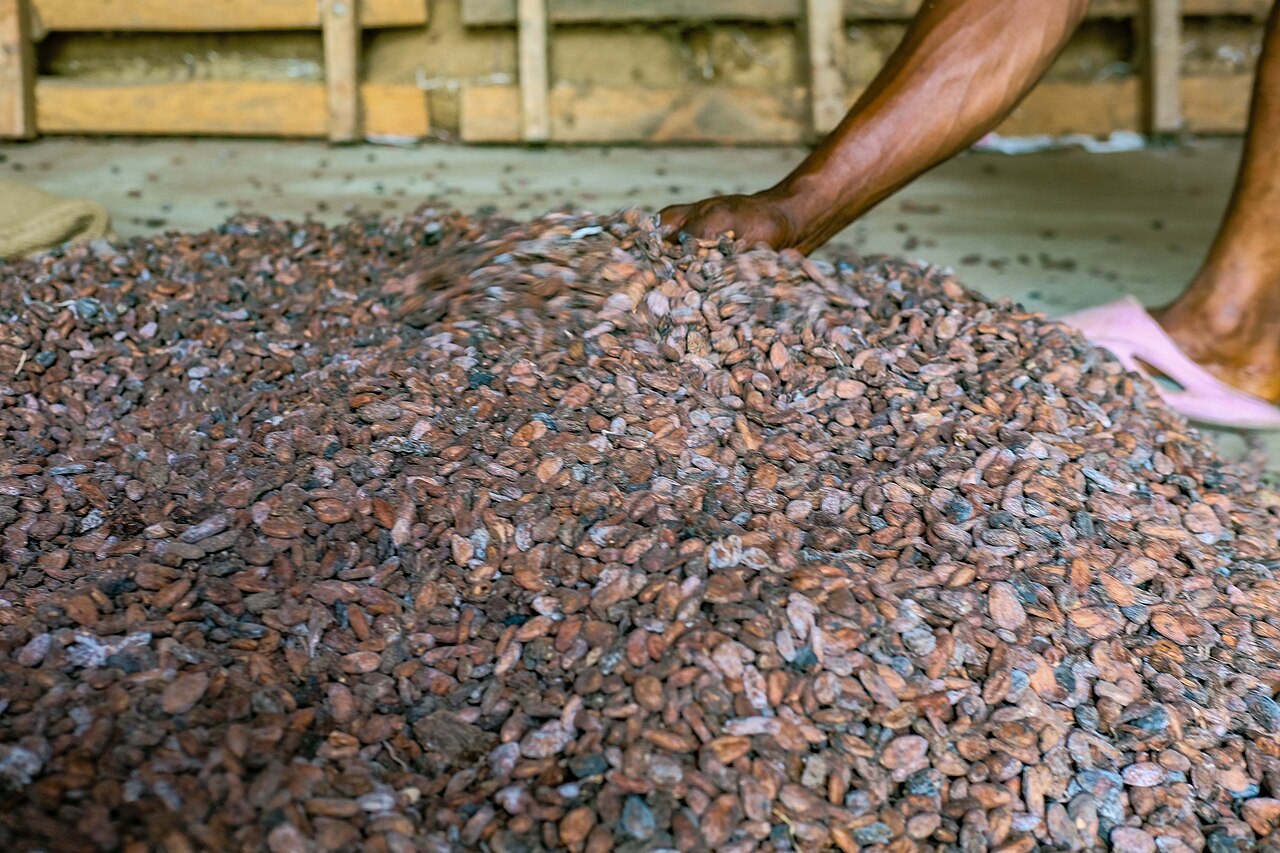
Fresh from the fermentation boxes, beans hold far too much water to store or ship. They are spread on mats, raised beds or large patios and dried, traditionally in the sun, with regular raking and turning so they dry evenly. The target is roughly 7 per cent moisture: dry enough that moulds cannot grow during weeks in a warehouse or a shipping container, but not so dry that the beans turn brittle. In wetter regions growers finish beans over wood-fired dryers, which risks a smoky taint that careful buyers reject. Drying is also a sorting stage, when flat, broken or mouldy beans are picked out by hand.
Only after this unglamorous step does cacao become a commodity that can cross an ocean, which is why a pod holding a few dozen beans needs the work of many hands before a single bar exists.
Roasting is only one stage
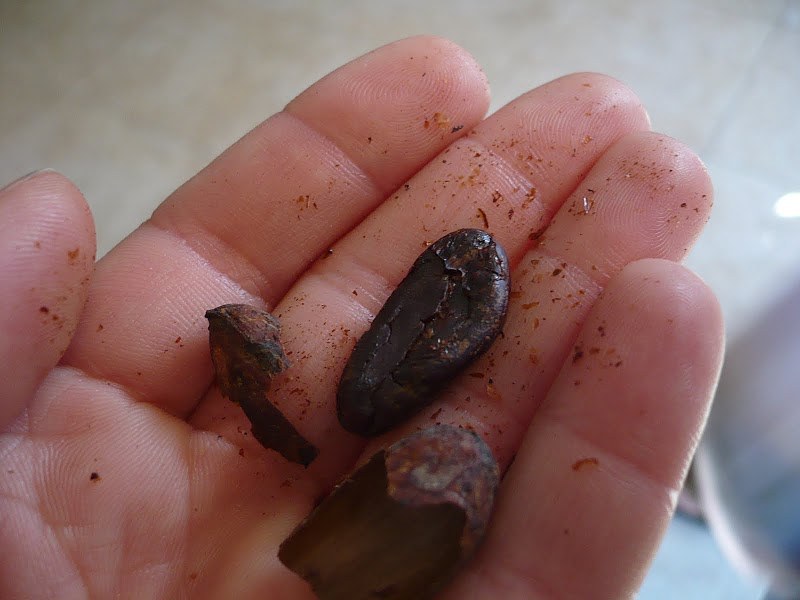
Roasting is where the chocolate flavour built by fermentation finally appears. Makers roast dried beans at temperatures typically somewhere around 120 to 150 degrees Celsius, varying the time and heat for each origin and recipe, rather like coffee. The heat deepens colour, drives off remaining acidic notes and loosens the thin shell around each bean. The roasted beans are then cracked and winnowed: fans blow away the light shell fragments, leaving the dense inner pieces, called nibs. Nibs are the useful part, roughly half cocoa butter and half cocoa solids, and they are what get ground, with sugar and any milk, into chocolate.
Roast too lightly and the bar tastes raw and sour; too dark and the origin character vanishes into bitterness. It is a short stage with an outsized effect.
A Dutch press changed everything in 1828
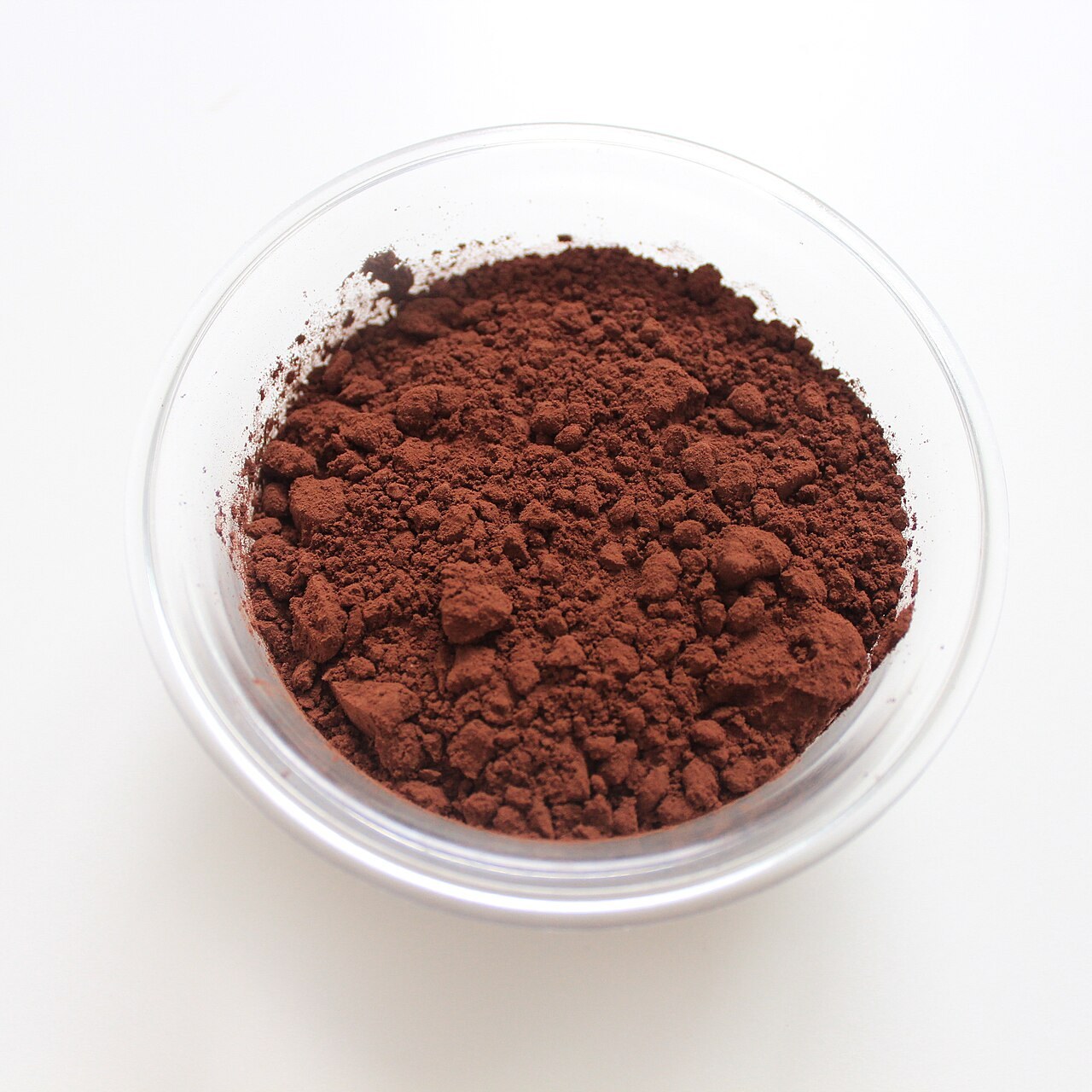
In 1828 the Amsterdam chemist Coenraad van Houten patented a hydraulic press that squeezed cocoa mass until much of its cocoa butter ran out, leaving a dry cake that could be milled into cocoa powder. The same inventor's alkali treatment, still called Dutching, made the powder darker and milder and let it mix into milk instead of sinking. The consequences were enormous. Drinking cocoa became cheap and convenient, and the press produced a surplus of cocoa butter, the ingredient that would soon let makers create solid eating chocolate by mixing the butter back into powder and sugar.
Almost everything in a modern chocolate factory, from cocoa breakfast drinks to the snap of a bar, descends from this one workshop invention, which is why 1828 is the date chocolate historians treat as the start of the industrial era.
Conching gave chocolate its silkiness
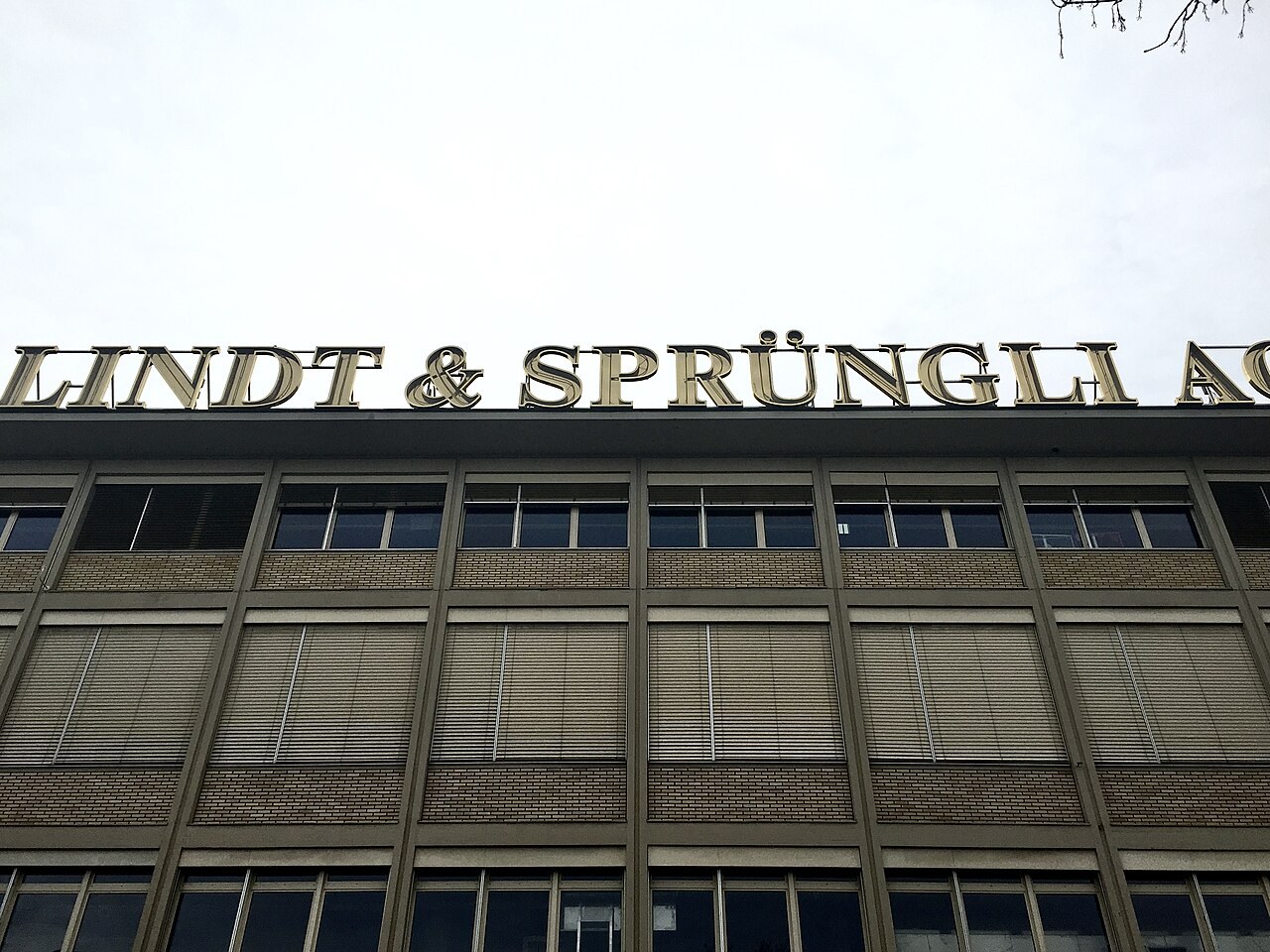
Early eating chocolate was gritty, because ground nibs and sugar never became truly fine. The change came in 1879, when Rodolphe Lindt of Bern developed the conche, a trough in which heavy rollers knead liquid chocolate for hours or even days. Lindt company tradition tells the discovery as a happy accident, a mixer left running over a weekend, but accident or not, the result was unmistakable: conching polishes the particle size down, coats every grain in cocoa butter, and lets harsh acidic flavours escape, producing the melting smoothness we now expect. Lindt's factory still stands at Kilchberg outside Zurich, pictured here.
Long conching remains a mark of premium makers, while shorter cycles are one of the quiet compromises behind cheaper bars. Taste a coarse stone-ground bar beside a long-conched one and the difference is immediate.
Tempering is crystal management
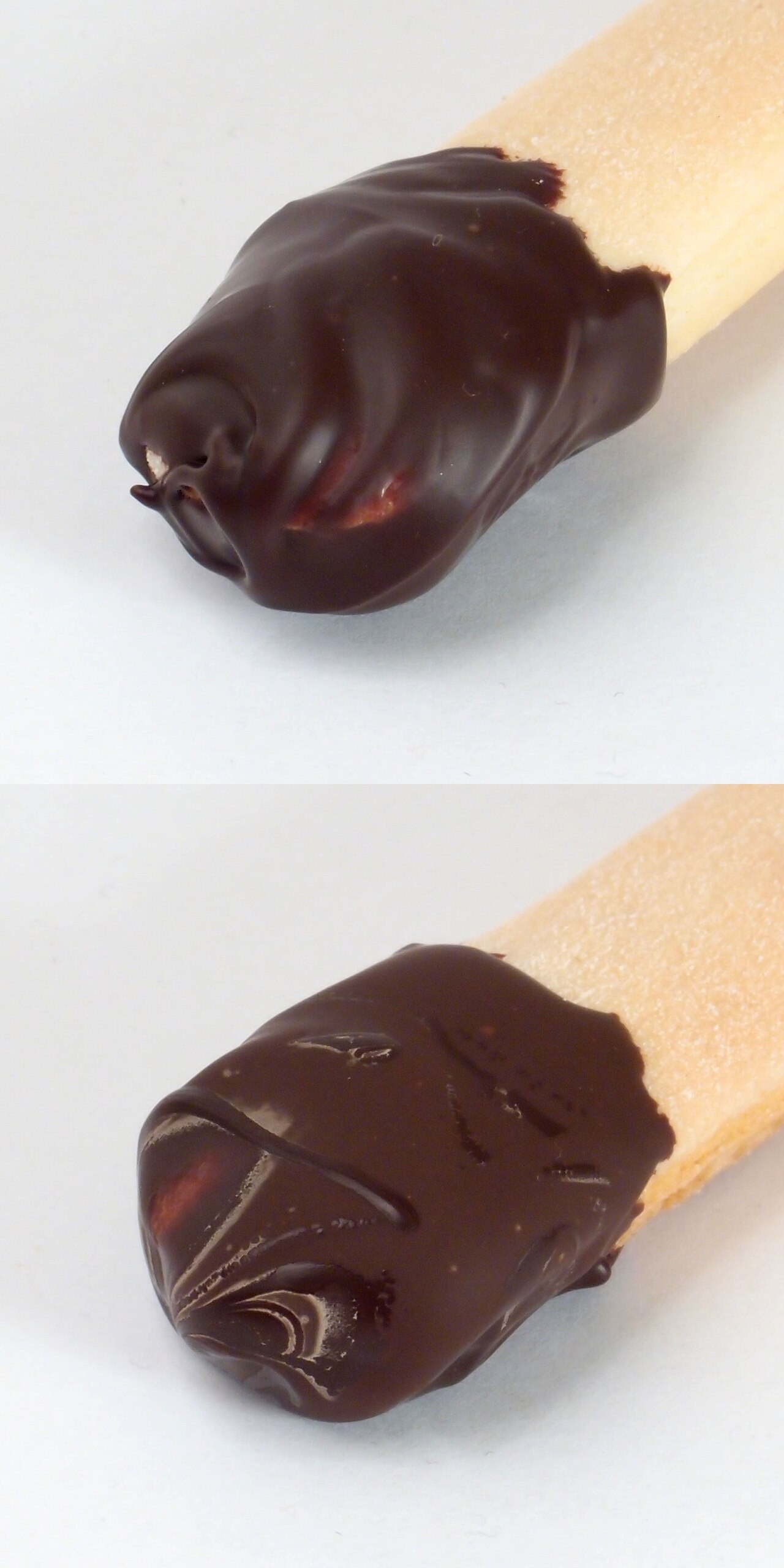
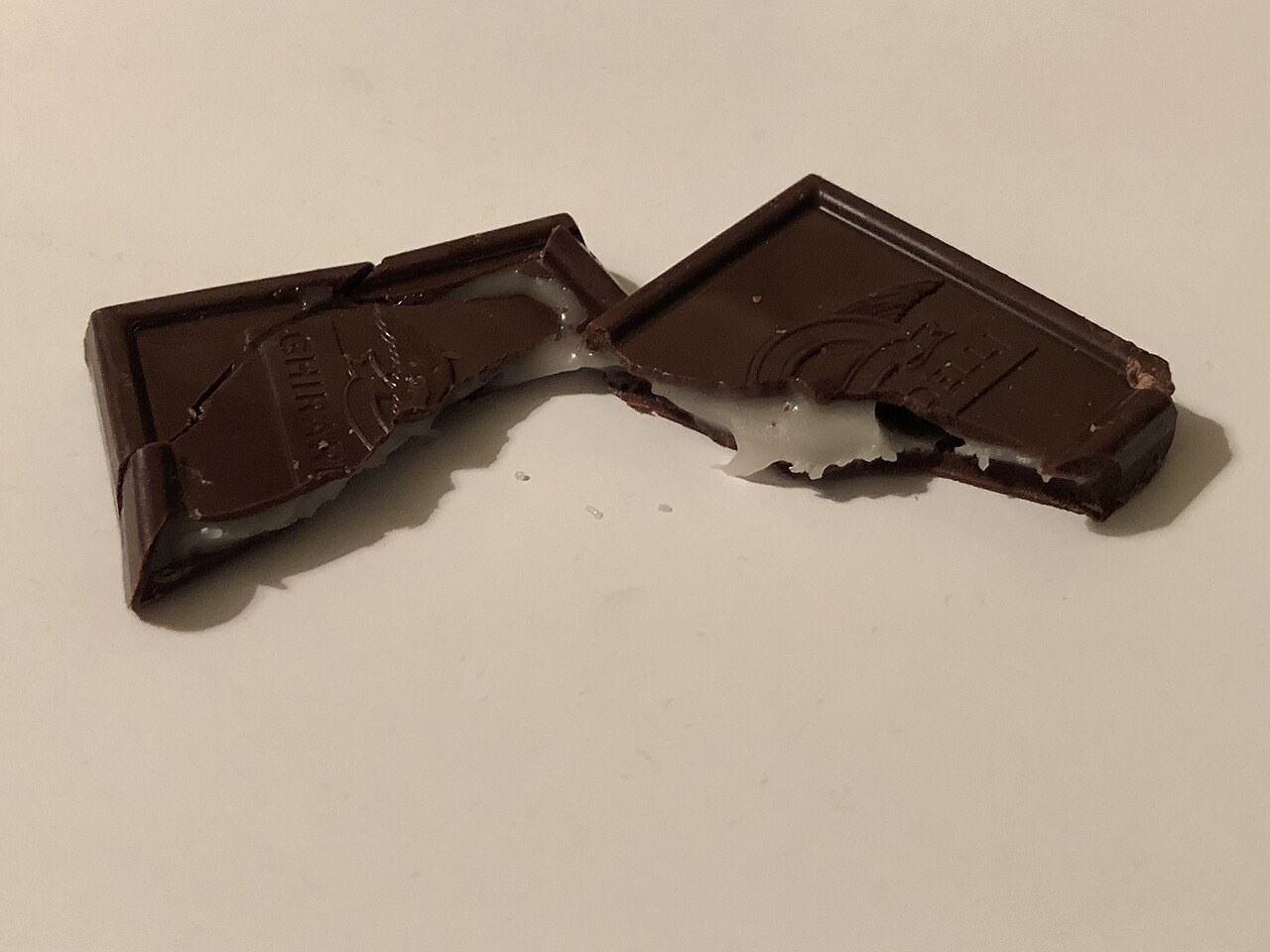
Chocolate's shine is crystallography. Cocoa butter can set into six different crystal forms as it cools, each with its own melting point and stability. The one chocolatiers want, called Form V, melts at about 34 degrees Celsius, just below body temperature, and gives a glossy surface, a clean snap and a bar that shrinks slightly from its mould. Tempering is simply the controlled cooling and reheating that persuades most of the fat to set in that form. Get it wrong, as the untempered sample in this photograph shows, and the chocolate sets dull, soft and crumbly, and is likely to bloom later.
The payoff of Form V is sensory as well as visual: because it melts only in the mouth, a well-tempered bar releases its flavour gradually instead of coating the palate in grease.
White chocolate is real chocolate, with an asterisk
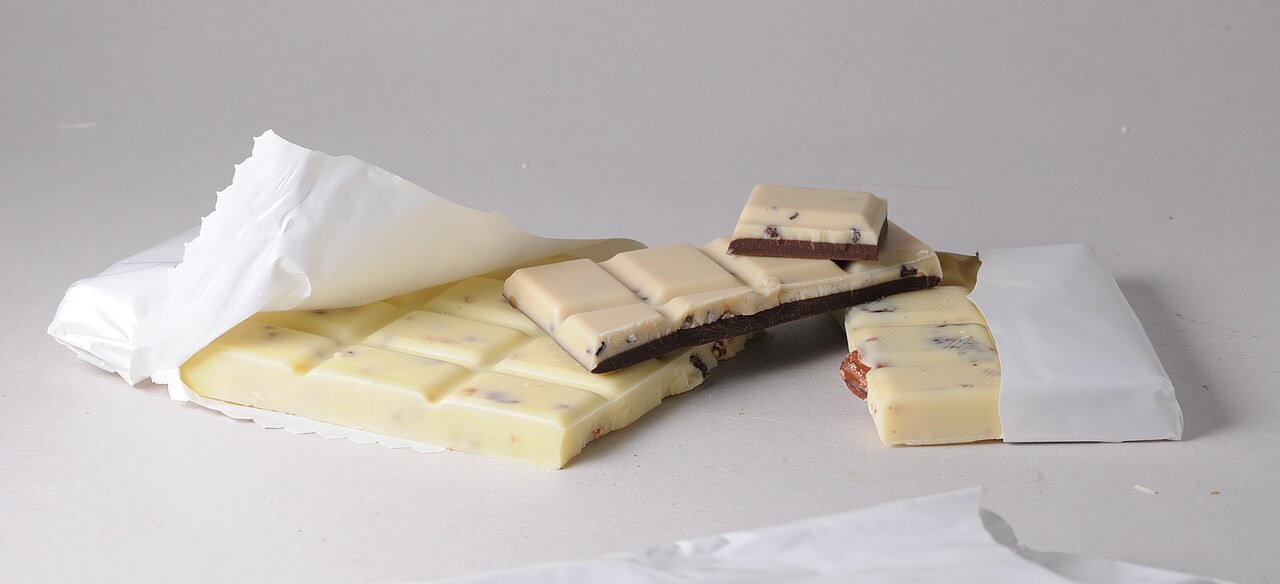
White chocolate divides opinion, but its identity is settled by law rather than taste. It is made from cocoa butter blended with sugar and milk solids, and it contains no cocoa solids, the brown, bitter part of the bean, which is why it is pale and tastes of vanilla, milk and caramel rather than cocoa. Food rules in the European Union and the United States both require at least 20 per cent cocoa butter before a product may be sold as white chocolate, a standard designed to stop manufacturers substituting cheaper vegetable fats entirely.
It was commercialised in 1930s Switzerland, when Nestlé launched its Galak bar in 1936 as a way to use surplus milk powder and cocoa butter. Because cocoa butter melts so cleanly, good white chocolate should still snap and melt like any other, even if it will never taste of cocoa.
Ruby chocolate arrived in 2017
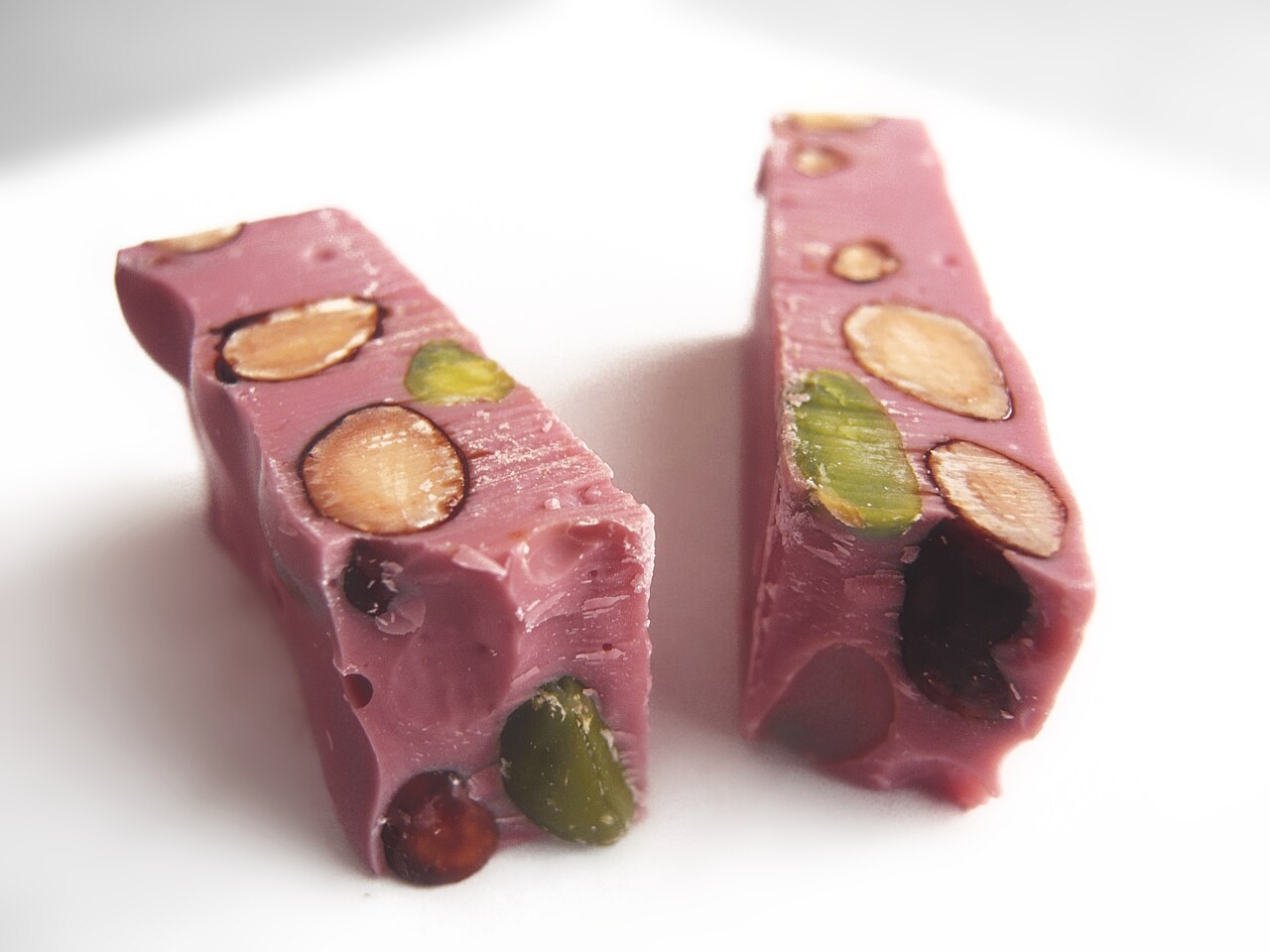
In September 2017 the Belgian-Swiss maker Barry Callebaut launched ruby chocolate, presenting it as a fourth style of chocolate alongside dark, milk and white. Its rose colour is not added: the company states that the pink hue and berry-like flavour come from how selected cacao beans are processed, and that no colourings or fruit flavourings are used. Callebaut said the development took more than a decade of work with researchers, starting from beans whose natural precursors produce the colour when handled a certain way. Within a year, ruby Kit Kats were on sale in Japan and South Korea, and chocolatiers worldwide had a genuinely new ingredient to argue about.
Sceptics note that ruby is a trademarked process rather than an open standard, so what counts as ruby is defined by one company. Either way, it was the first new chocolate style to reach the market in about eighty years.
The first solid bar was made in Bristol in 1847
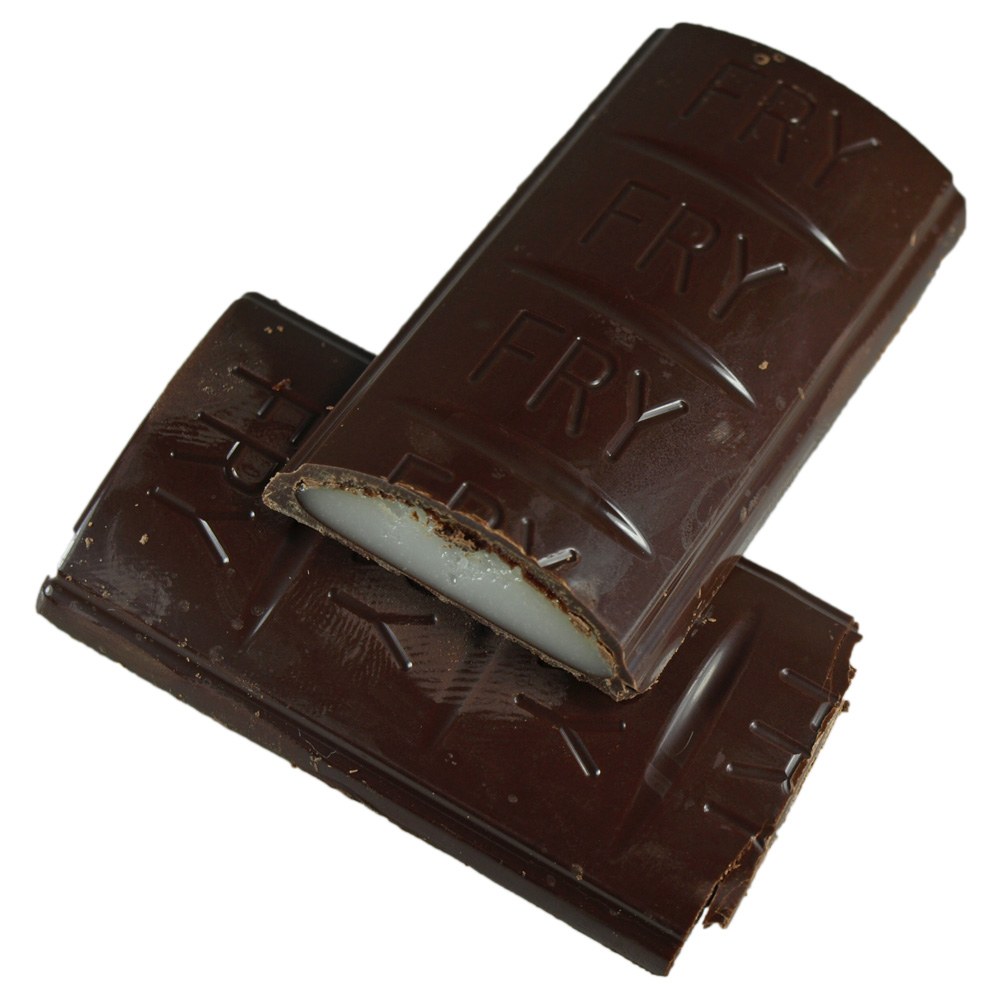
For most of its history, chocolate was something you drank. That changed in 1847, when J. S. Fry & Sons of Bristol produced what is generally recognised as the first solid eating chocolate: a paste of cocoa powder and sugar bound together with extra melted cocoa butter, poured into moulds and left to set. Van Houten's press had made that spare cocoa butter available, and Fry's put it to use. The plain bar was bitter by modern standards, but it was portable, shelf-stable and entirely new. Fry's followed it in 1866 with the Chocolate Cream, its fondant-filled bar, pictured here, which is often called the first mass-produced chocolate bar.
Cadbury, a few streets of history away in Birmingham, exhibited its own eating chocolate by 1849, and the race that still defines the industry had begun: everyone since has been refining Fry's basic idea.
Milk chocolate took years to crack
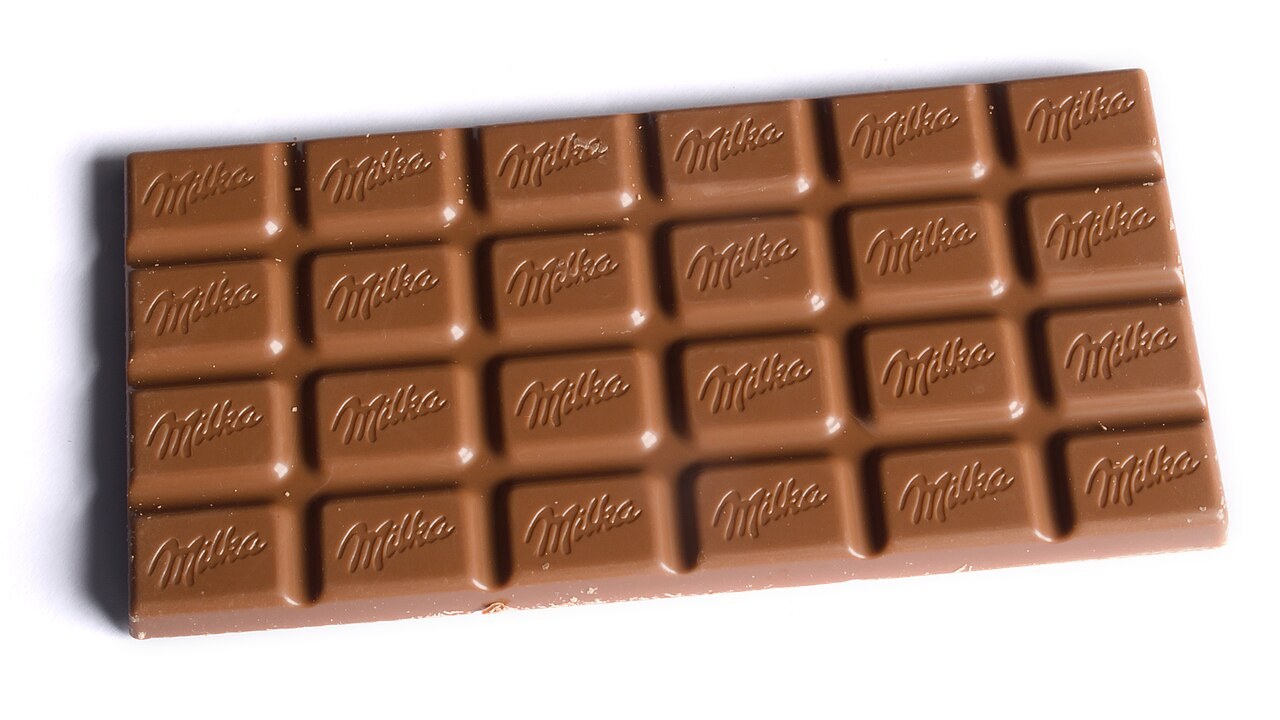
Adding milk to chocolate sounds simple, and resisted everyone who tried it. Fresh milk is mostly water, and water made chocolate seize, spoil and turn rancid, so early attempts failed for years. The answer came in Vevey, Switzerland, where chocolatier Daniel Peter, whose neighbour was Henri Nestlé, spent years experimenting before succeeding in 1875 with Nestlé's condensed milk, which added milk with far less water. The result was smoother, sweeter and milder than the dark eating chocolate of the day, and Peter's Gala Peter brand, on sale by 1887, set the template for the milk chocolate that now dominates world consumption.
The invention also fused two industries: the Swiss condensed-milk business and chocolate making grew up together, which is one reason Switzerland, a country with no cacao of its own, became chocolate's capital.
Chocolate was a drink for most of its history
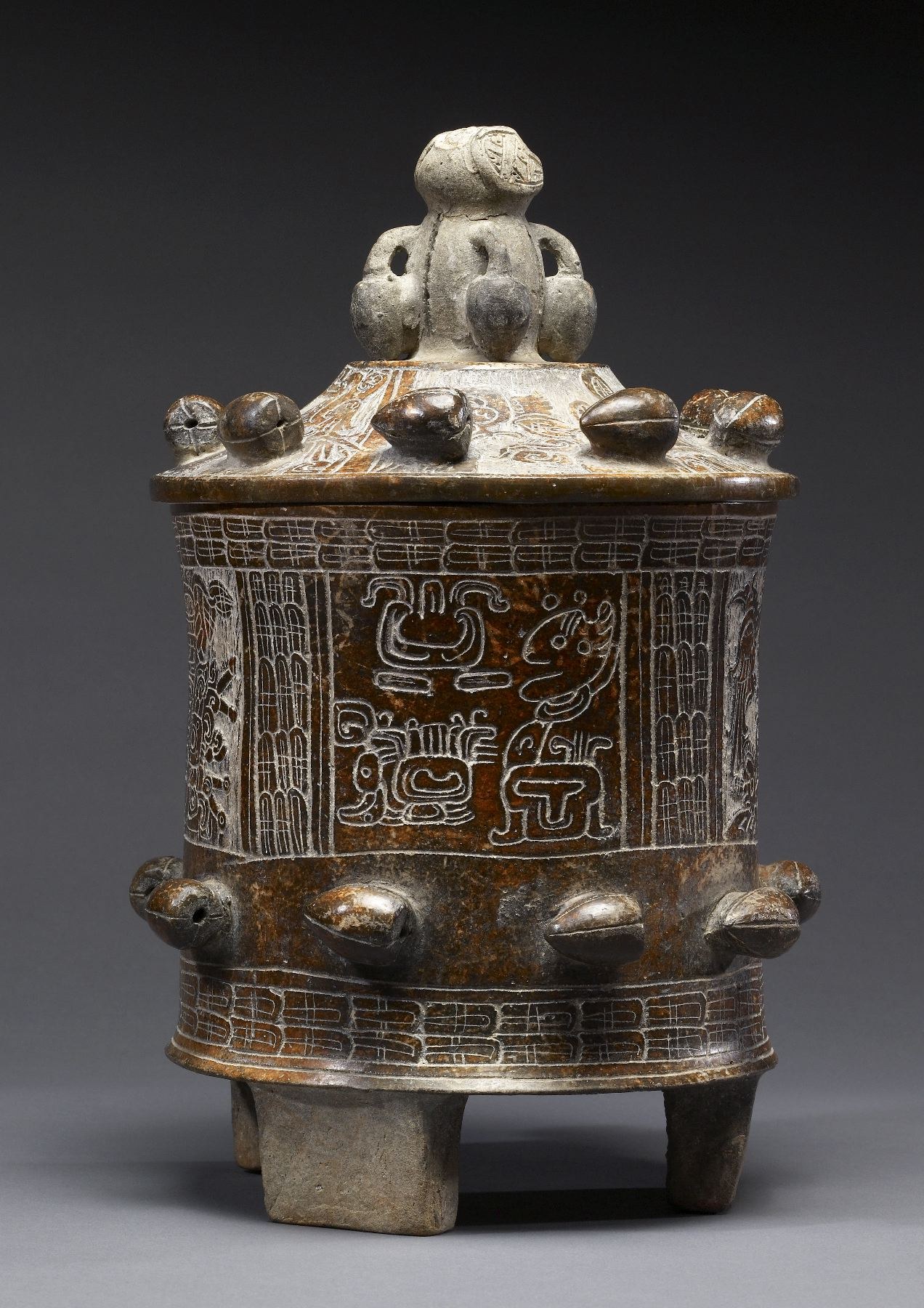
Measured against its whole history, the chocolate bar is a novelty. Cacao was domesticated in the Americas and, by Maya and Aztec times, was drunk whisked to a froth and flavoured with chilli, vanilla and other spices, served in vessels like the lidded Maya pot pictured here. Among the Aztecs, cacao was a luxury of nobles, priests and long-distance traders, and the beans doubled as small change: colonial-era documents record market prices quoted in beans. Drinking chocolate reached Spain in the 1500s, was sweetened with sugar and cinnamon, and stayed a drink, first of courts and then of fashionable chocolate houses, for some three hundred years.
The bar only arrived in 1847. So the historic way to enjoy chocolate is the Oaxacan one, hot, spiced and frothed, and the solid bar is a recent, mostly European, invention.
The percentage is not a quality score
The large number on a dark chocolate wrapper is widely misread. The percentage states how much of the bar, by weight, comes from the cacao bean, counting both cocoa solids and cocoa butter together. Most of the remainder is sugar, so a 70 per cent bar is typically around 30 per cent sugar. What the number cannot tell you is the quality of the beans, how well they were fermented and roasted, how much of the percentage is flavourful solids versus added cocoa butter, or how the recipe is balanced.
Two 70 per cent bars can taste completely different, and a well-made 60 per cent bar can beat a harsh 85 per cent one. Treat the percentage as a rough guide to intensity, then judge by origin, ingredient list and taste. Expensive beans badly handled lose to ordinary beans handled well at any percentage.
Storage quietly changes flavour
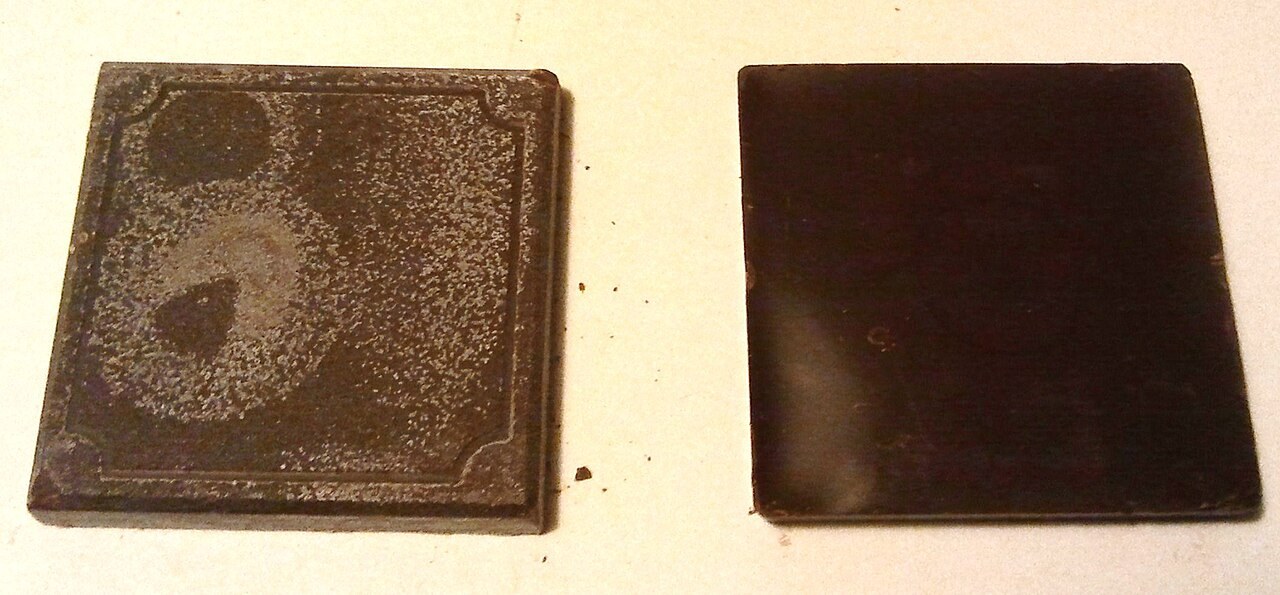
Chocolate rarely goes off in a way that makes it unsafe, but it easily goes dull. Warmth or temperature swings let cocoa butter migrate to the surface and recrystallise as fat bloom, the grey-white film in this photograph; it looks alarming, yet the chocolate is safe to eat, just less glossy and less snappy. Condensation causes the other defect, sugar bloom, a gritty white roughness. Chocolate also absorbs odours greedily, which is why a bar stored beside onions or spices quietly starts to taste of them.
The practical rules are simple: keep chocolate cool and dry, ideally somewhere around 15 to 18 degrees Celsius, sealed and away from strong smells, and avoid the fridge unless your kitchen is genuinely hot, in which case wrap it tightly and let it warm up still wrapped. Bloomed chocolate is still fine for cooking and hot chocolate.
Switzerland eats the most chocolate
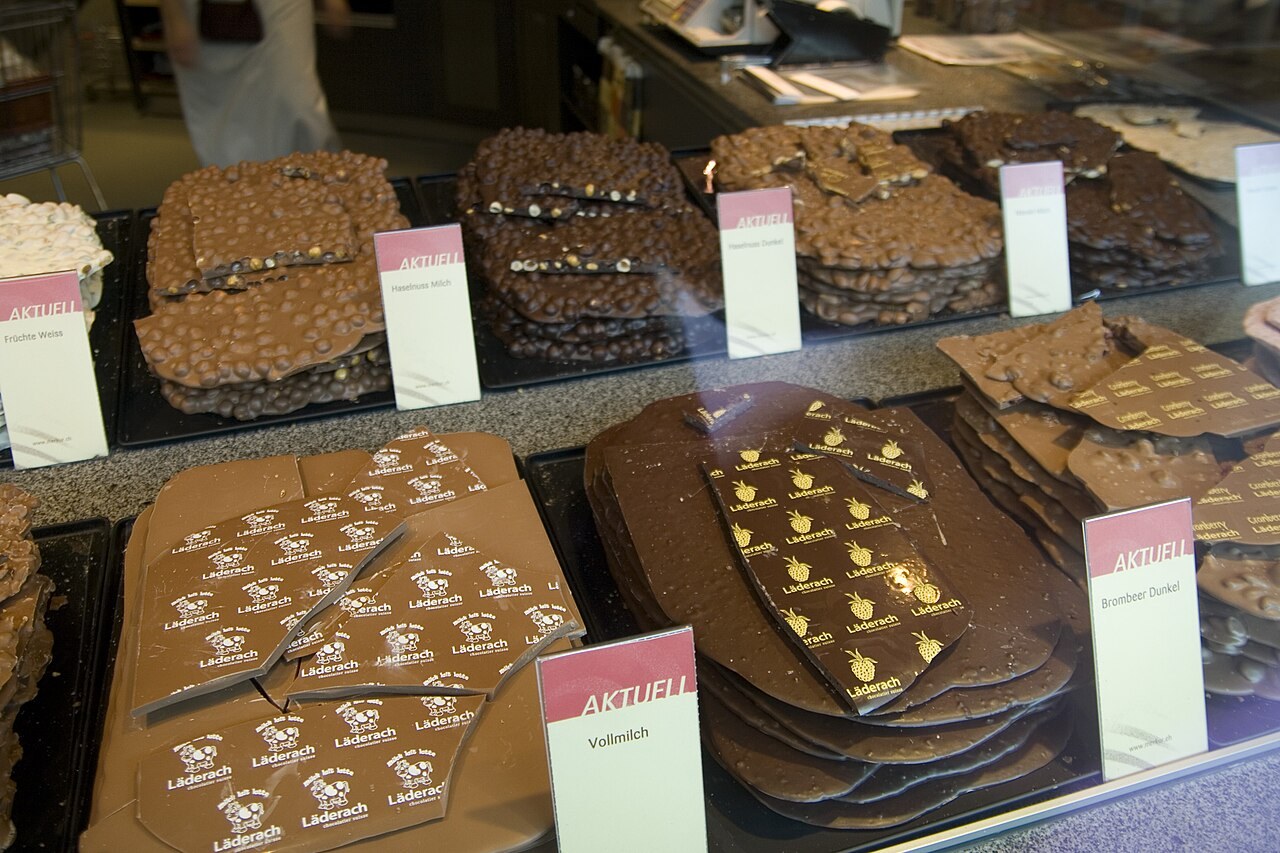
Switzerland grows not a single cacao tree, yet it regularly sits at or near the top of per-capita chocolate consumption tables, at roughly eight to nine kilograms per person per year in recent industry estimates. Treat the exact figure with care: estimates vary by year and by what they count, and small, rich countries trade the lead. The deeper point stands. Switzerland industrialised chocolate: Cailler founded his firm in 1819, Daniel Peter cracked milk chocolate there in 1875, Rodolphe Lindt invented the conche in 1879, and Theodor Tobler created the Toblerone in Bern in 1908.
Chocolate became part of Swiss daily life and national identity, exported worldwide and eaten enthusiastically at home, as the shop displays in tourist towns like Interlaken suggest. It remains the clearest proof that chocolate culture is made by makers and eaters, not by where the tree grows.
How to choose
Start with the real decision: who will use this, where, how often, and what would make the choice unsafe or disappointing? The following checks keep the shortlist practical.
- Prefer museum, botanical, academic, or transparent maker sources
- Check whether a claim refers to cacao or finished chocolate
- Distinguish documented history from company legend
- Avoid exaggerated health claims
- Treat per-capita and record-size statistics as estimates
- Store chocolate cool, dry, and away from odours
What to verify before you commit
Confirm the current specification, price or availability, terms, and seller or provider identity. For companies and services, request a written scope, named contact, references, and cancellation or warranty terms. For products, compare the unit price, compatibility, return window, and genuine support.
Editorial update
Chocolate facts are often repeated without context. This page distinguishes the cacao plant, cocoa ingredients, finished chocolate, and modern confectionery. Where a widely repeated claim could not be traced to a reliable source it was left out, and where a figure is an industry estimate rather than a measurement, the text says so.
Frequently asked questions
How should I use this guide?
Use the shortlist to define what matters to you, then verify current price, availability, rules, credentials, or catalogue details at the source before you decide.
Is this a fixed ranking?
No. The refreshed page is an editorial starting point organised by fit and evidence. The right choice depends on your use case, location, budget, and timing.
When will this page be updated?
VisitBest reviews time-sensitive details when reliable public information changes. Send corrections or newer source links to visitbest10@gmail.com.
Keep exploring

Punjabi Motivational Shayari on Life: Original Lines with Meaning
Original Punjabi motivational couplets in Gurmukhi with simple English meanings for captions, reflection, and encouragement.

Punjabi Sad Shayari: Original Reflective Lines with Meaning
Original Punjabi lines about distance, memory, and healing, presented in Gurmukhi with simple English meanings.

Best Digital Photography Books: A Reading Path from Exposure to Visual Storytelling
An ordered reading path combining exposure and composition manuals, classic monographs, portrait and project books, and critical writing about how…