
VisitBest guide
Google Ranking Factors: What Mattered in 2020 and What Matters Now
An honest replacement for the old 'ranking factors' checklist, sourced only from Google's own Search Central documentation: how Search works, relevance…
In this guide
At a glance
Google does not publish a fixed list of ranking factors, a count of 200, or universal weights, and this page does not invent any. Everything stated as Google's position below comes from Google's own Search Central documentation, Search Essentials, ranking systems guide or published announcements, and industry claims are labelled as industry claims. E-E-A-T is presented as what Google says it is — a concept from the search quality rater guidelines — not as a ranking factor. Where a date is given (the 2020 page experience announcement, the 2021 rollout, the 2022 helpful content system and E-E-A-T update), it is the date of Google's own publication.
- How Google Search works: crawling, indexing, serving — Google's three documented stages
- Query meaning and relevance — Language systems including BERT and RankBrain
- Helpful, reliable, people-first content — Google's helpful content guidance and self-assessment
- E-E-A-T: a rater-guideline concept, not a ranking factor — From the quality rater guidelines
Shortlist and comparison
| Topic | Best for | What to verify |
|---|---|---|
| How Google Search works: crawling, indexing, serving | Google's three documented stages | No payment is accepted for crawling or ranking |
| Query meaning and relevance | Language systems including BERT and RankBrain | Answer the real question, not a keyword count |
| Helpful, reliable, people-first content | Google's helpful content guidance and self-assessment | Original information and complete coverage |
| E-E-A-T: a rater-guideline concept, not a ranking factor | From the quality rater guidelines | Trust matters most; raters do not set rankings |
| Links, PageRank and discovery | Link analysis remains a core system | Only href links are reliably crawled; earn references |
| Mobile-first indexing | The mobile version is what gets indexed | Responsive design is Google's recommendation |
| Page experience and Core Web Vitals | Announced 2020, rolled out from May 2021 | LCP 2.5s, INP 200ms, CLS 0.1 are Google's stated thresholds |
| Freshness: when newer content matters | 'Query deserves freshness' systems | Update when facts change; do not fake dates |
| Structured data and search appearance | Understanding and rich-result eligibility | Not a ranking boost; markup must match visible content |
| Spam policies and manipulative practices | Cloaking, stuffing, link schemes, scaled abuse | Violations can remove a site from results |
| Measuring results in Search Console | Performance, indexing and Core Web Vitals reports | Meeting the Essentials guarantees nothing; measure anyway |
| Myth: Google has confirmed 200 ranking factors | An industry claim, not a Google statement | Google publishes no count, list or weights |
| Myth: keyword stuffing and exact-match repetition | Contradicted by the spam policies and Starter Guide | The meta keywords tag is not used |
| Then vs now: what actually changed since 2020 | Dated changes vs long-standing continuity | Track Search Central, not recycled checklists |
The brands in detail
How Google Search works: crawling, indexing, serving
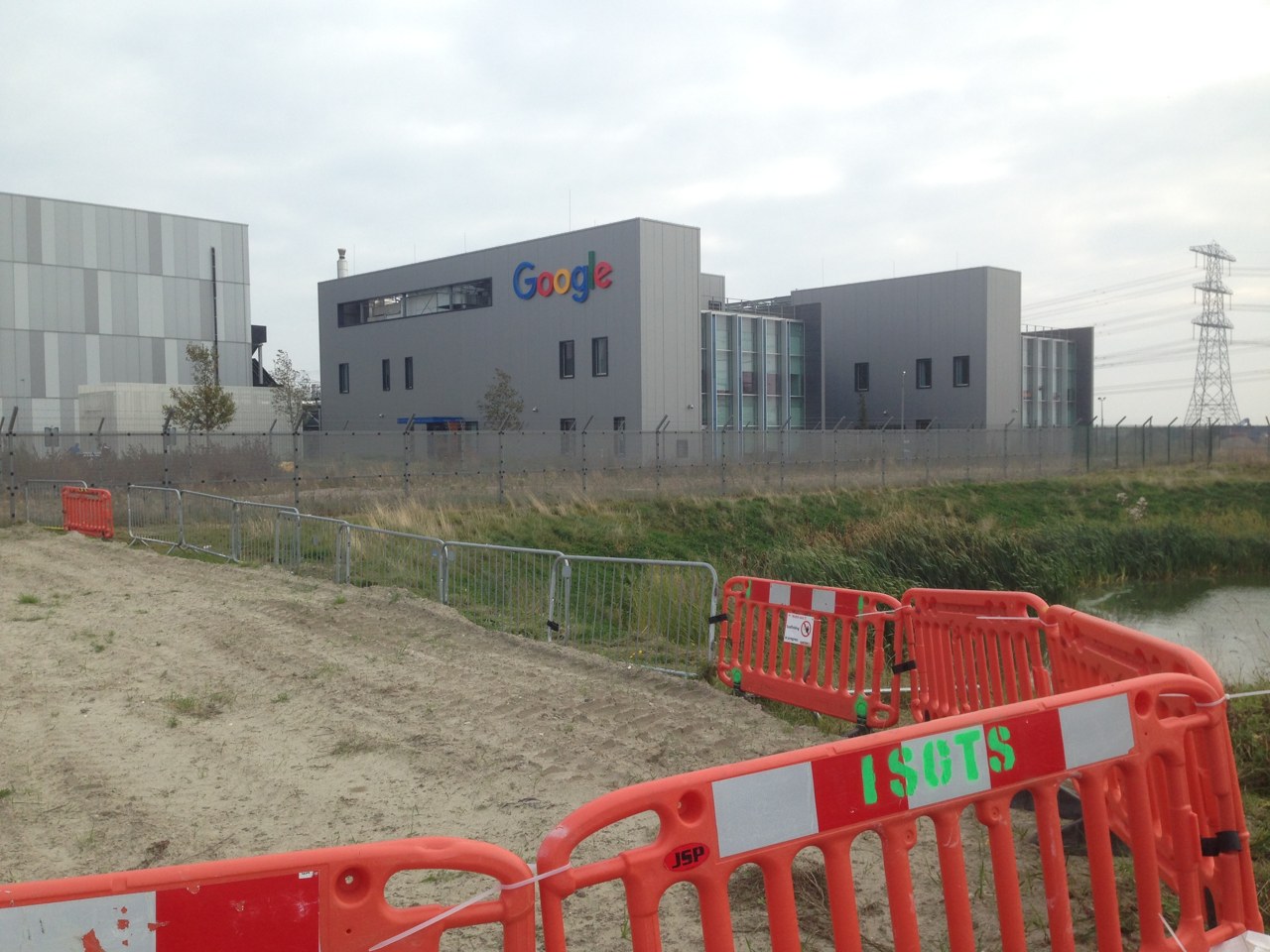
Google's own How Search Works documentation describes three stages. Crawling is discovery: Google's automated crawlers follow links and sitemaps to find pages. Indexing is analysis: Google reads the page's text, title element, image alt attributes and other content, stores it in the index and chooses a canonical version among duplicates. Serving is ranking: when someone searches, Google's automated systems consider many factors to return the most relevant, useful results. Google states plainly that it does not accept payment to crawl a site more often or rank it higher, and that following the Search Essentials does not guarantee a page will be crawled, indexed or served.
Every other section in this guide sits inside one of these three stages.
Query meaning and relevance
Google's guide to its automated ranking systems explains that relevance begins with meaning: its systems analyse how the words in a query relate to content, using language models such as BERT to understand how combinations of words express different meanings and intent, and RankBrain to connect words with concepts so relevant pages can be returned even when they do not contain the exact query words. Practically, this is why a page that answers the real question behind a search can outrank a page that merely repeats the phrase.
Google's SEO Starter Guide makes the same point from the publisher's side: write for the person searching, in the language they use, and do not expect any secret technique to place a site first automatically.
Helpful, reliable, people-first content
Google's Creating Helpful Content documentation says its automated ranking systems are designed to prioritise helpful, reliable information created for people, not content created to manipulate rankings. The self-assessment questions Google publishes are the closest thing to an official checklist that exists: does the page offer original information, reporting, research or analysis; does it cover its topic substantially and completely; would a reader feel they have learnt enough, or would they need to search again; and is the content produced with care rather than mass-produced or outsourced without review. Sites are assessed both page by page and, for the helpful content system, at site level.
Nothing in the guidance mentions word counts, keyword densities or posting frequencies.
E-E-A-T: a rater-guideline concept, not a ranking factor
E-E-A-T stands for experience, expertise, authoritativeness and trust, and it comes from Google's Search Quality Rater Guidelines — the handbook used by human quality raters who evaluate how well Google's ranking systems are working. Google states explicitly in its helpful content documentation that E-E-A-T itself is not a specific ranking factor, and its December 2022 announcement of the added 'experience' E repeats that the guidelines do not directly influence ranking. What raters assess instead feeds back into system development.
Within E-E-A-T, Google says trust is the most important aspect, and that its systems give more weight to content demonstrating strong E-E-A-T for topics that can affect a person's health, finances or safety. Treating E-E-A-T as a score to optimise directly is a misunderstanding this page corrects rather than repeats.
Links, PageRank and discovery
Links matter in two documented ways. Google's ranking systems guide confirms that link analysis systems, including PageRank, remain part of how Google understands which pages are authoritative and relevant, and its link best practices documentation explains that Google also uses links to discover new pages: only standard HTML links with an href attribute are reliably followed by its crawlers. Google's advice is mundane — write descriptive anchor text, link internally to related content so readers and crawlers can navigate, and earn references by making something worth citing.
The same documentation warns that buying or selling links to manipulate rankings violates the spam policies unless the links are qualified with rel="nofollow" or rel="sponsored". There is no published number of links a page 'needs'.
Mobile-first indexing
Google's mobile-first indexing documentation states that Google uses the mobile version of a site's content, crawled with its smartphone agent, for indexing and ranking. This change, announced in the late 2010s and completed as the default for the web in the years around 2020, is one of the clearest examples of a real, dated shift between the '2020' version of ranking advice and today: a page whose mobile version hides content, blocks resources or differs structurally from its desktop version is indexed on what mobile users — and Google's smartphone crawler — actually receive. Google recommends responsive design so that one URL serves both.
Desktop-only problems that never reach the mobile version no longer decide how a page is indexed.
Page experience and Core Web Vitals
In May 2020 Google announced a page experience signal combining Core Web Vitals with existing signals such as mobile-friendliness, HTTPS and intrusive-interstitial guidelines, and in November 2020 it confirmed the rollout for May 2021 — so in 2020 this was a forthcoming change, not a live factor. Google's Core Web Vitals documentation gives the current good-experience thresholds its systems use as guidance: largest contentful paint within 2.5 seconds, interaction to next paint under 200 milliseconds, and cumulative layout shift below 0.1.
Google is equally clear about proportion: its helpful content documentation notes that core ranking systems reward good page experience across many aspects, but relevance and content quality come first — a fast page with the wrong answer still fails the searcher.
Freshness: when newer content matters
Google's ranking systems guide describes freshness systems, often called 'query deserves freshness', which are designed to surface more recent content for queries where searchers would expect it — breaking news, recurring events, prices, reviews and anything whose correct answer changes over time. For evergreen topics, the same systems have little reason to prefer a newly dated page over an established one. This is why mechanically updating a publication date without changing the content is not a ranking technique Google endorses anywhere in its documentation: the freshness systems respond to genuinely newer information for queries that need it.
The honest practice is to update pages when their facts change, keep dates accurate, and leave stable content stable.
Structured data and search appearance
Structured data is frequently miscast as a ranking factor. Google's documentation positions it differently: adding valid structured data helps Google understand a page's content and makes the page eligible for richer search appearances, such as review stars, recipe cards or event details, where the relevant feature exists. Eligibility is not a guarantee of display, and the structured data policies require the markup to describe content that is actually visible on the page. In 2020, as now, structured data was therefore an appearance and understanding tool, not a lever that lifts an irrelevant page above relevant ones.
It belongs in a ranking-factors guide only with that boundary stated, which is how Google itself presents it in Search Central.
Spam policies and manipulative practices
The negative side of ranking is documented just as openly. Google's spam policies define spam as techniques used to deceive users or manipulate its systems, and list practices such as cloaking, keyword stuffing, link schemes, scraped or automatically generated content produced to manipulate rankings, and hacked content. Detection is automated, supplemented by human review and manual actions, and Google states that violating sites may rank lower or not appear in results at all. The SEO Starter Guide confirms one specific long-running myth here: Google Search does not use the meta keywords tag.
Staying out of trouble is therefore not a ranking boost but a precondition — the Search Essentials frame the spam policies as one of only three requirement groups for appearing in Google Search at all.
Measuring results in Search Console
Google's consistent advice is to measure rather than guess. Search Console is the free tool Google provides for exactly this: its Performance report shows the queries and pages generating impressions and clicks, the Core Web Vitals report flags page-experience problems against the published thresholds, and the indexing reports show which pages Google has crawled and indexed and which it has excluded, with reasons. The Search Essentials make one expectation-setting statement publishers should keep in view: meeting every requirement does not guarantee crawling, indexing or serving.
So the defensible workflow Google's own documentation supports is audit intent and content first, fix technical barriers second, and read the results in Search Console over weeks — not chase weekly 'algorithm weight' rumours.
Myth: Google has confirmed 200 ranking factors
The claim that Google ranks pages using '200 ranking factors' has circulated in SEO articles for well over a decade and is usually traced to early industry writing that popularised the figure — it is a claim repeated by marketers and listicle writers, not a number Google has ever confirmed in its documentation. Google's own materials describe 'many factors and signals' drawn from hundreds of billions of indexed pages and deliberately do not publish a fixed list, a count or any weights, because its systems change constantly and because publishing weights would invite manipulation.
Any page — including older versions of this one — that presents a numbered list of 200 factors with implied precision is presenting industry folklore as fact. This guide attributes the claim to its popularisers and follows Google's documentation instead.
Myth: keyword stuffing and exact-match repetition
A cluster of related myths survives from pre-2020 practice: that a page must repeat its target phrase a set number of times, hit a particular keyword density, or stuff a meta keywords tag. Google's documentation contradicts each of them. The spam policies list keyword stuffing — unnaturally repeating words or phrases to manipulate rankings — as a violation. The SEO Starter Guide states that Google Search does not use the meta keywords tag at all. And the relevance systems described in Google's ranking guide work by understanding meaning and concepts, not by counting exact matches.
Writing naturally, using the words a searcher would use, and covering the topic completely is not a soft alternative to these techniques; according to Google's own pages, it is what replaced them.
Then vs now: what actually changed since 2020
Comparing Google's 2020 position with today's documentation, the honest summary is continuity with specific, dated changes. Continuity: relevance to the query, original and trustworthy content, links as a signal of authority and discovery, and spam enforcement were central in 2020 and remain central. Dated changes: the page experience signal built on Core Web Vitals was announced in 2020 and rolled out from May 2021; mobile-first indexing became the universal default around the same period; the helpful content system, introduced in 2022, strengthened site-level assessment of people-first content; and 'experience' was added to the rater guidelines' E-A-T in December 2022 to make E-E-A-T.
What did not happen at any point is the publication of factor weights. Publishers who track Google's own documentation, rather than recycled checklists, can date every real change.
How to choose
Start with the real decision: who will use this, where, how often, and what would make the choice unsafe or disappointing? The following checks keep the shortlist practical.
- Sourced only from Google's own Search Central documentation and statements
- No invented percentages, weights or factor rankings
- E-E-A-T described as a rater-guideline concept, as Google presents it
- Industry claims attributed to their popularisers, not to Google
What to verify before you commit
Confirm the current specification, price or availability, terms, and seller or provider identity. For companies and services, request a written scope, named contact, references, and cancellation or warranty terms. For products, compare the unit price, compatibility, return window, and genuine support.
Editorial update
Google does not publish a fixed list of ranking factors, a count of 200, or universal weights, and this page does not invent any. Everything stated as Google's position below comes from Google's own Search Central documentation, Search Essentials, ranking systems guide or published announcements, and industry claims are labelled as industry claims. E-E-A-T is presented as what Google says it is — a concept from the search quality rater guidelines — not as a ranking factor. Where a date is given (the 2020 page experience announcement, the 2021 rollout, the 2022 helpful content system and E-E-A-T update), it is the date of Google's own publication.
Primary reference: Google's guide to Search ranking systems. Google says its systems use many signals rather than a fixed public scorecard.
Frequently asked questions
How should I use this guide?
Use the shortlist to define what matters to you, then verify current price, availability, rules, credentials, or catalogue details at the source before you decide.
Is this a fixed ranking?
No. The refreshed page is an editorial starting point organised by fit and evidence. The right choice depends on your use case, location, budget, and timing.
When will this page be updated?
VisitBest reviews time-sensitive details when reliable public information changes. Send corrections or newer source links to visitbest10@gmail.com.
Keep exploring
Top 6 Bluetooth Speakers in India: Sound, Battery and Durability Compared
A buyer's guide to portable speakers by size, sound balance, battery test conditions, water resistance, codec support, and repairability.

VisitBest Tools and Research Checklists
Simple checklists for comparing products, reviewing companies, checking sources, and finding the right VisitBest guide.

Top 6 Laptops Under ₹20,000 in India: New, Chromebook and Refurbished Options
A realistic guide to entry-level laptops under ₹20,000, including the trade-offs between new low-cost devices, Chromebooks, tablets with keyboards…