
VisitBest guide
Best Educational Websites in India: Top Official and Free Learning Sites for Students
A practical guide to the best educational websites for Indian students — the official government platforms for textbooks, board information and free…
In this guide
At a glance
Start with the official sources: for syllabus, textbooks, exam dates and results, only the board and government websites listed first here are authoritative, and most of their material is free. Commercial platforms can help with explanation and practice, but compare what is free against what needs a subscription before paying, and always type the official domain yourself rather than following look-alike links — NIOS, for example, has publicly warned students about fake websites using its name. Five sites in this list (e-Pathshala, CISCE, NIOS, e-PG Pathshala and eGyanKosh) are shown without a logo because no clean official logo file could be downloaded and verified when this guide was prepared; their entries are complete without one.
- NCERT — Free official textbooks for Classes 1–12 in English, Hindi and Urdu
- e-Pathshala — NCERT e-books, audio and video in a reader-friendly portal and app
- DIKSHA — National school platform with digital textbooks, courses and QR-linked lessons
- CBSE — Official board site for curriculum, circulars, sample papers and exam notices
Shortlist and comparison
| Topic | Best for | What to verify |
|---|---|---|
| NCERT | Free official textbooks for Classes 1–12 in English, Hindi and Urdu | Download the current, rationalised edition for your class |
| e-Pathshala | NCERT e-books, audio and video in a reader-friendly portal and app | Choose your role — student, teacher or parent — for the right shelf |
| DIKSHA | National school platform with digital textbooks, courses and QR-linked lessons | Set your board, class and medium before browsing |
| CBSE | Official board site for curriculum, circulars, sample papers and exam notices | Use cbse.gov.in for board notices; check the academics unit for curriculum documents |
| CISCE | Official ICSE and ISC board site for syllabus, regulations and results | Confirm the current year's syllabus and specimen papers |
| NIOS | Open schooling for Secondary and Senior Secondary learners | Use only nios.ac.in — the board warns about fake sites and apps |
| SWAYAM | Free government MOOCs from school to postgraduate level | Check whether your institution accepts the course for credit |
| NPTEL | Free IIT and IISc engineering and science courses | Course level — undergraduate or postgraduate — and certificate exam dates |
| e-PG Pathshala | Free postgraduate e-content across 70+ subjects | Your subject and paper before downloading modules |
| eGyanKosh | IGNOU's national repository of distance-learning study material | Search by programme and course code for the right blocks |
| National Digital Library of India | One search across books, theses, articles and lectures | Filter by level and language; some items need a free login |
| Khan Academy | Free lessons and practice in maths, science and more | Pick the India/NCERT-aligned course for your class where offered |
| BYJU'S | App-based video learning for school classes and entrance exams | What is free versus locked behind a paid programme |
| Unacademy | Live exam-preparation courses for UPSC, SSC, JEE, NEET and more | Educator record and the current subscription terms |
| Vedantu | Live online classes for Classes 1–12 and JEE/NEET | Class size, teacher and trial-class terms before enrolling |
The brands in detail
NCERT

The National Council of Educational Research and Training (NCERT) is the Government of India body that develops the national school curriculum and publishes the textbooks used in CBSE schools and adopted, in whole or part, by many state boards. Its website is the single most useful free resource on this list: the complete NCERT textbook for every subject in Classes 1 to 12 can be read online or downloaded free as PDF or ePub editions, in English, Hindi and Urdu. Because board and entrance-exam questions are set from these books, students should always work from the current edition — NCERT has rationalised several textbooks in recent years, and older PDFs circulating on unofficial sites may contain deleted chapters. The site also carries syllabuses, exemplar problems, teacher handbooks and NCERT's journals, making it the reference point for teachers as well as students.
e-Pathshala
e-Pathshala is the digital reading platform built specifically to carry NCERT's material to phones and computers. NCERT's own description calls it a joint initiative of the Ministry of Education and NCERT, developed to showcase and disseminate educational e-resources — textbooks, audio, video, periodicals and other print and non-print material — to students, teachers, parents and educators. In practice it is the friendliest way to read the Class 1 to 12 textbooks: books open chapter by chapter in a flipbook-style reader, the mobile app works on modest phones, and read-aloud and text-to-speech options help younger children and learners with visual difficulties. The platform also hosts e-books from state boards, so a student whose school follows a state syllabus may still find their book here. Everything on e-Pathshala is free, and it is the best starting point for a parent who wants the exact book a child uses at school.
DIKSHA

DIKSHA — Digital Infrastructure for Knowledge Sharing — is India's national platform for school education, run for the Ministry of Education. Its own description says it offers personalised courses, digital textbooks and resources for teachers and students across India, and its content is organised by state board, class, subject and language, so a Class 10 science student in one state sees a different shelf from a primary teacher in another. Many printed NCERT textbooks carry QR codes in their chapters; scanning one opens the matching DIKSHA page with videos, interactive exercises and additional reading on that topic, which is why DIKSHA is often described as the digital layer on top of the textbook. Teachers use the same platform for professional-development courses and classroom material. Access is free through the website and the DIKSHA app, and setting your board and class correctly at the start makes the library far easier to use.
CBSE
The Central Board of Secondary Education's website is the authoritative source for everything about the CBSE system: affiliation and board circulars, examination notices and datesheets, and links to results for the Class 10 and Class 12 board examinations. Students most often need three things from it — the current curriculum and syllabus documents for their subjects, the sample question papers the board publishes each year to show the paper pattern, and official circulars that announce changes to exam format or schedules. Social-media posts and coaching sites frequently summarise these documents inaccurately or circulate outdated versions, so any important claim about paper patterns, passing rules or dates should be checked against the board's own publication. Start at cbse.gov.in and follow its links to the board's academic and examination sections; keep your class and subject codes handy, because official documents are filed by them.
CISCE
The Council for the Indian School Certificate Examinations (CISCE) is the national board that conducts the Indian Certificate of Secondary Education (ICSE) examination for Class 10 and the Indian School Certificate (ISC) examination for Class 12. Established in 1958 and headquartered in New Delhi, the Council is a private, non-governmental board whose schools are known for an English-medium curriculum with a strong emphasis on language and literature. Its website, cisce.org, is where ICSE and ISC students and schools should confirm the regulations and syllabuses for their year, specimen and sample question papers, examination timetables and, in season, results. Because CISCE revises subject syllabuses periodically and prescribes specific texts for literature papers, students should download the syllabus document for their exact examination year rather than relying on summaries or older printouts shared online.
NIOS
The National Institute of Open Schooling (NIOS) is India's board for learners who study outside a regular school timetable. Established in November 1989 as an autonomous institution under the Ministry of Education, it offers Open Basic Education, Secondary (Class 10 equivalent) and Senior Secondary (Class 12 equivalent) courses, plus vocational and life-enrichment programmes, all through open and distance learning — which makes it the standard route for dropouts returning to education, sportspersons, working learners and home-schooled students. Its website handles the whole journey: admission, study-centre information, downloadable course material, datesheets and results. One caution deserves emphasis because NIOS itself stresses it: the board has repeatedly warned that fake websites and apps imitate it, and that its only official website is nios.ac.in. Admissions and fees should only ever be handled through that domain.
SWAYAM
SWAYAM is the Government of India's own massive open online course (MOOC) platform, and its logo carries its promise plainly: free online education. Courses run from school level through undergraduate and postgraduate study, along with teacher-training and skill courses, and they are produced by national coordinators including NCERT, UGC, IGNOU, NPTEL and AICTE, with teaching by faculty from universities and institutions such as the IITs and IIMs. A typical course combines weekly video lectures, readings, assignments and discussion forums over several weeks; learning is free, while learners who want a certificate can register for a proctored examination. University students should check whether their institution accepts a chosen SWAYAM course for credit under the UGC's credit-transfer framework before relying on it. For school students, SWAYAM's school-level courses and recorded lessons are a dependable free supplement to classroom study.
NPTEL

The National Programme on Technology Enhanced Learning (NPTEL) is the joint initiative of the Indian Institutes of Technology and the Indian Institute of Science to put high-quality engineering and science teaching online, free. Its catalogue covers computer science, electrical, mechanical, civil and other engineering branches, alongside mathematics, sciences, humanities and management, in both video and text-based web formats developed from actual IIT and IISc courses. College students use NPTEL to reinforce difficult subjects with a second explanation; working professionals use it to pick up new skills; and serious school students use its introductory courses to taste a subject before choosing a stream. Through the SWAYAM platform, NPTEL courses run in scheduled cohorts with assignments, and learners can sit a proctored certification examination to earn a certificate. Check each course page for its level and prerequisites — most assume first-year undergraduate mathematics.
e-PG Pathshala
e-PG Pathshala is the postgraduate counterpart to the school platforms above. It is an initiative of the Ministry of Education under the National Mission on Education through ICT, executed by the University Grants Commission (UGC) with technical support from the INFLIBNET Centre, which hosts the site. The platform's own description says it provides high-quality, curriculum-based e-content for postgraduate education across more than 70 subjects in the social sciences, arts, humanities, languages and the natural and mathematical sciences. Each subject is broken into papers and modules written by university teachers, and a module typically combines e-text you can read or download, a recorded video explanation, self-assessment questions and links for further reading. Postgraduate students and UGC-NET aspirants use it as a free, syllabus-aligned reference that follows Indian university curricula rather than a foreign textbook's structure.
eGyanKosh
eGyanKosh is the national digital repository built and maintained by the Indira Gandhi National Open University (IGNOU). In its own words, it is a repository to store, index, preserve, distribute and share the digital learning resources developed by the open and distance learning institutions of the country, with easy and open access to text, images and moving images. Its core collection is IGNOU's self-learning material: the same printed study blocks posted to enrolled students, organised by programme and course code, so a learner who has lost a block — or wants to read ahead before admission — can download the official material as PDFs. Radio and television session archives and recorded live classes sit alongside the print material. Although it exists for IGNOU learners, the repository is openly searchable by anyone, which makes it a useful free library for distance-mode students of other universities too.
National Digital Library of India
The National Digital Library of India (NDLI) is best thought of as one search box placed over many libraries. Sponsored and mentored by the Ministry of Education through its National Mission on Education through ICT and developed at the Indian Institute of Technology Kharagpur, it describes itself as a virtual repository of learning resources with services for the learner community, rather than a single collection. A search can surface school textbooks, university course material, research papers and theses, competitive-exam resources, audio lectures and videos drawn from institutions across India and abroad, filterable by educational level, subject and language. School students will mostly use it to find alternative explanations and extra reading; researchers use it to locate theses and papers. Browsing and basic searching are open to everyone, while some collections and personalised features ask for a free registered login.
Khan Academy
Khan Academy is a non-profit organisation offering free lessons and practice exercises, originally built around short, carefully explained maths videos and now covering science, computing, economics, humanities and test preparation. Its strength for Indian students is structured practice: topics are broken into small skills with immediate-feedback exercises, and a free account tracks mastery as you progress, which suits daily revision alongside school. Much of its school maths and science content is mapped to Indian curricula, including courses organised around NCERT chapters for middle and senior classes, and content is also offered in Indian languages including Hindi, which helps students who learn concepts better in their home language first. Because it is free, carries no advertising-driven upselling and needs no payment details, it is usually the first commercial-free supplement teachers recommend for Classes 6 to 12 mathematics and science.
BYJU'S
BYJU'S is a Bengaluru-based education technology company whose learning app became one of India's best-known study brands. In its own description it offers comprehensive e-learning programmes for early learning and Classes up to 12, and for competitive examinations including NEET, JEE, UPSC and bank exams, taught — the company says — by India's best teachers. The format is video-led: animated and recorded lessons explain concepts, followed by practice questions and tests inside the app, with paid programmes adding structured courses, personal mentoring features and printed or tablet-based material depending on the package. Some introductory content is free, but the full programmes are subscription products sold for a term or course, so families should establish exactly what a package includes, its duration and its refund terms before paying, and should treat the free material as the trial it is meant to be.
Unacademy

Unacademy is an online learning platform built mainly around competitive examinations. Its own summary invites learners to prepare for examinations and take courses across many topics, and in India it is best known for UPSC civil-services preparation and for courses aimed at SSC, banking, railways, JEE and NEET aspirants. Teaching is delivered as live online classes by independent educators, supported by recorded lessons, notes, test series and doubt-clearing sessions; a subscription typically unlocks a whole exam category rather than a single course. The live format suits students who study better to a timetable and want to ask questions in real time, while the educator-led model means quality varies by teacher — most learners watch an educator's free introductory classes first. As with every subscription platform, check the current price, validity period and refund policy on the official site before enrolling.
Vedantu

Vedantu is an Indian online tutoring platform whose name comes from 'Veda' (knowledge) and 'Tantu' (network). Its own description presents it as a choice for live online classes from kindergarten to Class 12, covering CBSE and ICSE school syllabuses and JEE and NEET preparation, led by what it calls master teachers; the company also runs offline centres for JEE and NEET in some cities. Unlike purely recorded-video platforms, Vedantu's core product is the interactive live class — students can respond, ask doubts and attempt questions during the session, and class recordings, notes and tests follow afterwards. Group classes are the more affordable format, with one-to-one tuition priced higher. Families comparing it with recorded courses should weigh whether the child actually attends scheduled classes; a free trial class, which the platform routinely offers, is the sensible first step before any long enrolment.
How to choose
Start with the real decision: who will use this, where, how often, and what would make the choice unsafe or disappointing? The following checks keep the shortlist practical.
- Match the website to your board, class and medium of instruction first — official content is organised that way
- Use official government domains (.gov.in, .nic.in, .ac.in) for syllabus, datesheets and results, and type the address yourself to avoid fake look-alike sites
- Check what is genuinely free: textbooks and government courses are free, while commercial platforms mix free material with paid subscriptions
- Prefer downloadable material (PDF textbooks, offline lessons) if your connection is slow or shared
- Re-check exam-related details close to the exam — boards revise dates and formats through official circulars
What to verify before you commit
Confirm the current specification, price or availability, terms, and seller or provider identity. For companies and services, request a written scope, named contact, references, and cancellation or warranty terms. For products, compare the unit price, compatibility, return window, and genuine support.
Editorial update
Start with the official sources: for syllabus, textbooks, exam dates and results, only the board and government websites listed first here are authoritative, and most of their material is free. Commercial platforms can help with explanation and practice, but compare what is free against what needs a subscription before paying, and always type the official domain yourself rather than following look-alike links — NIOS, for example, has publicly warned students about fake websites using its name. Five sites in this list (e-Pathshala, CISCE, NIOS, e-PG Pathshala and eGyanKosh) are shown without a logo because no clean official logo file could be downloaded and verified when this guide was prepared; their entries are complete without one.
Frequently asked questions
How should I use this guide?
Use the shortlist to define what matters to you, then verify current price, availability, rules, credentials, or catalogue details at the source before you decide.
Is this a fixed ranking?
No. The refreshed page is an editorial starting point organised by fit and evidence. The right choice depends on your use case, location, budget, and timing.
When will this page be updated?
VisitBest reviews time-sensitive details when reliable public information changes. Send corrections or newer source links to visitbest10@gmail.com.
Keep exploring
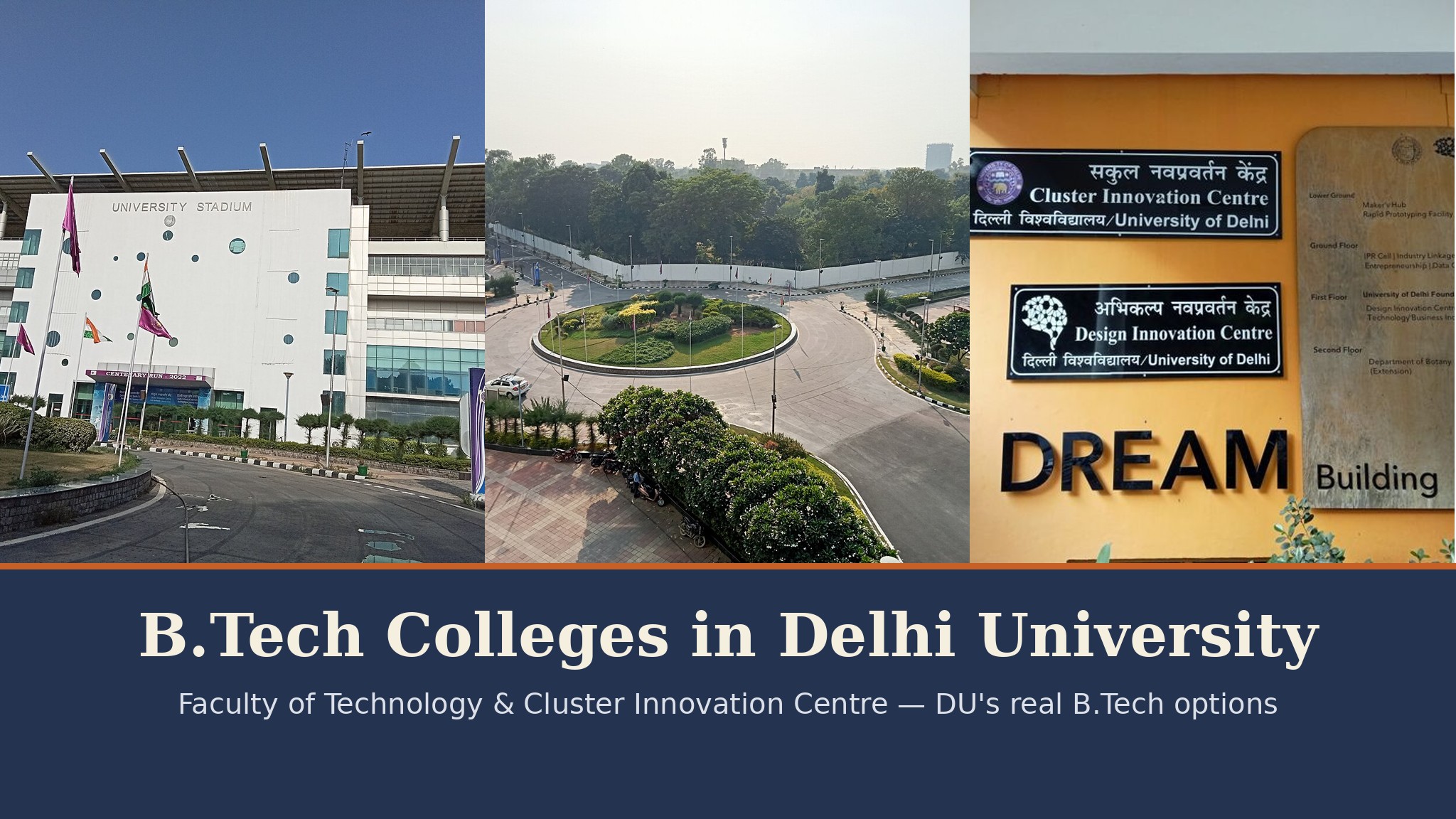
B.Tech Colleges in Delhi University: Faculty of Technology and Cluster Innovation Centre
The honest guide to B.Tech at the University of Delhi: the university's own Faculty of Technology (CSE, ECE and EE through JEE Main) and the Cluster…

Pharma Companies in Delhi (2026)
Explore pharma companies in Delhi — ratings, company types, comparison tables, and VisitBest directory listings.

Pharma Companies in Gurugram (2026)
Explore pharma companies in Gurugram — ratings, company types, comparison tables, and VisitBest directory listings.