
VisitBest guide
Top 6 Yoga Mats: Choose the Right Grip, Cushion and Material
Compare yoga mats by practice style, grip when dry or sweaty, thickness, density, size, material, odour, cleaning, and carrying weight.
In this guide
At a glance
More thickness is not always better: a very soft mat can make standing balance less stable. Match cushioning to your joints and floor while keeping a firm base.
- Natural rubber mat — Strong grip and dense cushioning
- TPE mat — Lightweight general home practice
- PVC mat — Durability and broad price range
- Cork-top mat — Grip that can improve with moisture
Shortlist and comparison
| Option | Best for | What to verify |
|---|---|---|
| Natural rubber mat | Strong grip and dense cushioning | Latex sensitivity, weight, and care |
| TPE mat | Lightweight general home practice | Durability and manufacturer composition |
| PVC mat | Durability and broad price range | Grip, odour, and end-of-life considerations |
| Cork-top mat | Grip that can improve with moisture | Dry grip and cleaning method |
| Jute blend mat | Textured surface and natural-fibre feel | Comfort for floor poses |
| Travel mat | Folding or light packing | Minimal cushioning and floor cleanliness |
This post contains affiliate links. As an Amazon Associate, we earn from qualifying purchases. This does not affect our editorial independence.
The brands in detail
Natural rubber mat

Natural rubber mats are made from tapped tree rubber, usually with a PU or microfibre top layer bonded over a solid rubber base. The material is dense, so these mats lie completely flat, grip the floor hard and give strong hand and foot traction that holds up in dynamic and sweaty practice, with firm, grounded cushioning rather than a soft, spongy feel. They suit regular practitioners and hot-yoga users who prioritise grip and stability. They are heavier to carry, can smell of rubber at first, need airing before use, and should be kept out of strong sunlight.
Featured model: Wiselife MicroFiber & Natural Rubber Yoga Mat + Carry Strap | 5MM | Extra Large Extra Wide | Anti skid Anti slip for Yoga & Workout (Bohemian Rug)
TPE mat
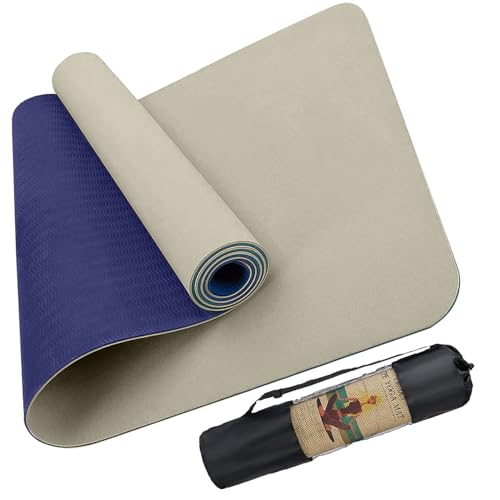
TPE mats are made from thermoplastic elastomer, a soft, rubber-like material usually built as a dual-layer, dual-colour sheet with textured surfaces on both sides. They are noticeably lighter than rubber or PVC mats of the same thickness, give comfortable, springy cushioning for knees and joints, and provide reliable dry grip for everyday practice, which is why they are a popular first mat for home use. TPE suits beginners, home practitioners and anyone carrying a mat to a class. Avoid leaving one in heat or strong sun, wipe it clean after use, and check the textured surface has not worn smooth.
Featured model: B Fit Premium TPE Yoga Mat - Classic 6 MM Pro Yoga Mat Eco Friendly Non Slip Fitness Exercise Mat with Smart Carry Bag-Workout Mat for Yoga, Pilates and Floor Exercises (Off White)
PVC mat

PVC mats are the long-established workhorse of yoga mats, made from polyvinyl chloride in a wide range of thicknesses, colours and price bands. The material is tough, resists tearing and abrasion, wipes clean easily and keeps its slightly sticky surface feel for years, which is why studios and schools often buy PVC in bulk. Grip is good for general practice, though very sweaty hands can still slip. PVC suits beginners, studios and budget buyers who want durability above all. A new mat can smell at first, so air it before use, and note that PVC is not biodegradable.
Featured model: Gaiam Essentials Yoga Mat, 6mm Non-Slip with Carrying Sling (Orange)
Cork-top mat

Cork-top mats have a surface layer of natural cork, harvested from cork-oak bark, bonded to a rubber or TPE base that provides cushioning and floor grip. Cork feels dry and smooth at the start of practice, and its grip genuinely improves as it absorbs moisture, so hands and feet hold better in sweaty, heated and hot-yoga sessions. Cork is also naturally resistant to odours. These mats suit hot-yoga practitioners and anyone whose palms slip on foam mats. Wipe the surface clean gently, never fold a cork mat, and roll it with the cork side facing out to prevent cracking.
Featured model: Premium Non Toxic Cork Yoga Mat With Snoopy Design- 100% Sweat Proof, Non Slip Yoga Mat - Natural, Eco Friendly & Odor Free | Reversible | Undisputable Earth Grip I No Plastic - No TPE(Thermo Plastic Elastomer) / PVC /EVA | Beginner 4mm | Exercise Yoga Mat for Men & Women I True Sustainability (3 mm) - Pandabee
Jute blend mat
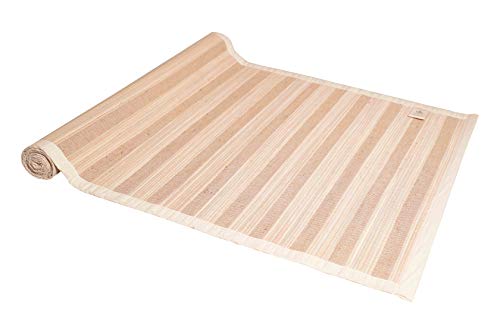
Jute blend mats weave natural jute fibre into, or bond it over, a supporting base layer, giving a distinctly textured, natural-fibre surface quite unlike smooth foam mats. The woven fibre adds natural traction and a firm, grounded feel, while the base layer provides what cushioning the mat has, and the mats are valued by buyers avoiding fully synthetic surfaces. They suit slower, traditional practice, meditation and eco-conscious home users. Expect a coarser feel under hands and knees, keep the mat dry, brush or shake it clean rather than soaking it, and check the base material and thickness before buying.
Featured model: Naturals Sambu Jute Yoga Mats for Men Women (with Free Carry Bag) & (24 * 72)
Travel mat

Travel mats are full-length yoga mats made deliberately thin and light, commonly around one to two millimetres thick, so they fold down flat into a suitcase or daypack instead of rolling into a bulky tube. Most use microfibre, suede-like or TPE top surfaces over a thin rubber base for grip. The trade-off is minimal cushioning: they feel firm and grounded, and many travellers lay one over a studio mat for hygiene and extra grip. They suit frequent travellers, commuters and outdoor practice. Fold along the existing creases, wipe clean after use, and add padding under knees for floor poses.
Featured model: Wiselife MicroFiber & Natural Rubber Foldable Yoga Mat + Carry Bag | Extra Thick Extra Long Extra Wide Exercise floor Mat For Gym, Workout, Fitness | Natural Rubber Yoga Mat (1MM,Arbian Morning)
How to choose
Start with the real decision: who will use this, where, how often, and what would make the choice unsafe or disappointing? The following checks keep the shortlist practical.
- Practice style and sweat level
- Stable density
- Enough length and width
- Cleaning and storage requirements
What to verify before you commit
Confirm the current specification, price or availability, terms, and seller or provider identity. For companies and services, request a written scope, named contact, references, and cancellation or warranty terms. For products, compare the unit price, compatibility, return window, and genuine support.
Editorial update
More thickness is not always better: a very soft mat can make standing balance less stable. Match cushioning to your joints and floor while keeping a firm base.
Frequently asked questions
How should I use this guide?
Use the shortlist to define what matters to you, then verify current price, availability, rules, credentials, or catalogue details at the source before you decide.
Is this a fixed ranking?
No. The refreshed page is an editorial starting point organised by fit and evidence. The right choice depends on your use case, location, budget, and timing.
When will this page be updated?
VisitBest reviews time-sensitive details when reliable public information changes. Send corrections or newer source links to visitbest10@gmail.com.
Keep exploring

Punjabi Motivational Shayari on Life: Original Lines with Meaning
Original Punjabi motivational couplets in Gurmukhi with simple English meanings for captions, reflection, and encouragement.

Punjabi Sad Shayari: Original Reflective Lines with Meaning
Original Punjabi lines about distance, memory, and healing, presented in Gurmukhi with simple English meanings.

Best Digital Photography Books: A Reading Path from Exposure to Visual Storytelling
An ordered reading path combining exposure and composition manuals, classic monographs, portrait and project books, and critical writing about how…